
Private Personal Trainers
Work one-on-one with a private personal trainer. Compare experience, hourly rates, and parent reviews, then reach out directly. No commission, no booking fees.
Currently serving New Jersey
Private Personal Trainers
Unclaimed Profile
This profile was created by RiteCoach on behalf of the coach. The coach has not yet claimed the profile.R.
Private Personal Training for Kids and Teens in New Jersey
New Jersey high school sports run in three seasons, fall, winter and spring, and plenty of teenagers play in two of them, then add a club team in the gaps. That schedule builds skill, but it rarely builds the strength, speed and conditioning that hold a young body together through it.
Read moreRead less
Team practice is spent on the sport itself, and a school weight room with one coach for forty athletes cannot teach every lift properly. A personal trainer who works with young people fills that gap: a safe strength program for a growing athlete, speed and agility work before a season, a gradual return after an injury once a doctor has cleared it, or simply regular exercise for a teenager who does not play an organized sport. Personal training is one of the newer categories on Rite Coach, so listings are still growing. Coaches list their background, the age groups they train, their hourly rate, and where they run sessions.
- 2 coaches listed
- Coaches in 1 counties
- Message coaches directly, no booking fees
Where to play
Browse Personal Trainer by Location
All of New JerseyNorth Jersey
Coaches are listed in 1 of New Jersey's 21 counties so far. Don't see yours? Search by town above, or open the nearest county listed. New coaches are added every week.
Is Strength Training Safe for Kids and Teens?
With proper supervision, yes. Major pediatric and strength and conditioning organizations have said for years that age-appropriate resistance training is safe for children and teens, and the old warning that lifting stunts growth is not supported by the research.
Read moreRead less
Most injuries in youth weight training come from poor technique, too much weight, horseplay and missing supervision, not from the training itself. That is the honest caveat. Safe means a trainer who teaches movement before load, starts younger children with body weight, bands and light implements, and adds weight slowly as form holds up. It also means a program sized to the athlete's season, because a teenager already practicing six days a week does not need a punishing extra workout. A child with a heart condition, a recent injury or any other medical concern should see a doctor first. Ask a trainer how they decide when a young athlete is ready to add weight.
How it Works
Simple, transparent steps to connect coaches and athletes.
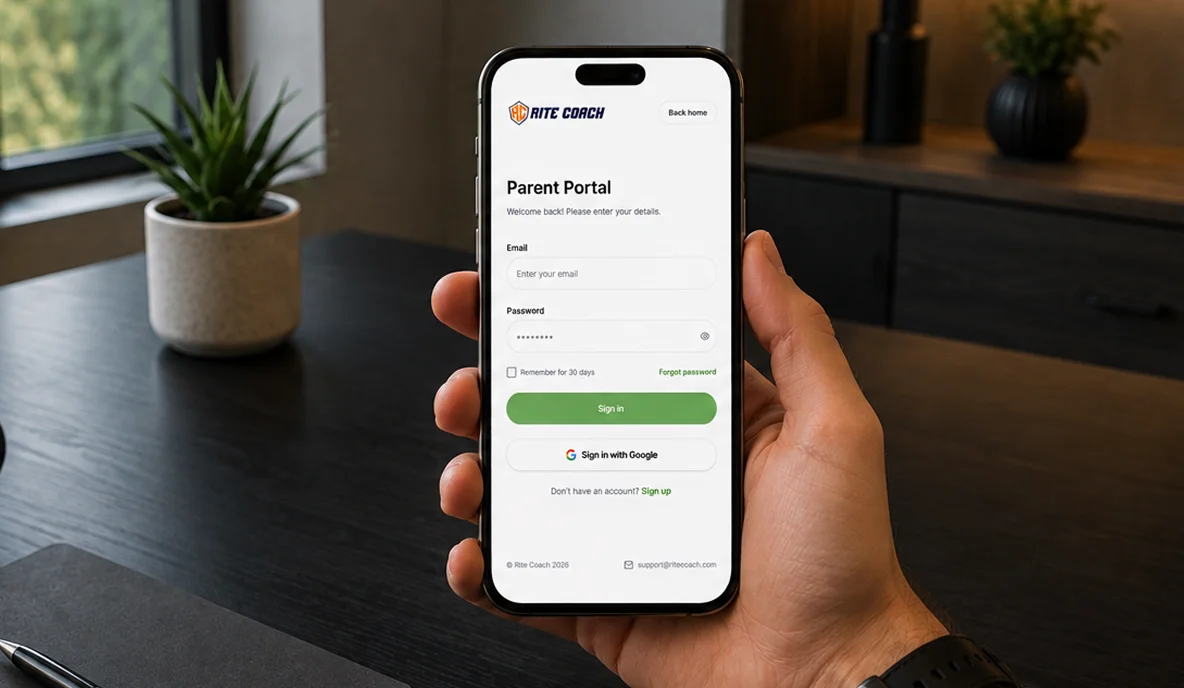
Step 1
Create Your Profile
Parents create a profile and start finding the right coach in seconds.
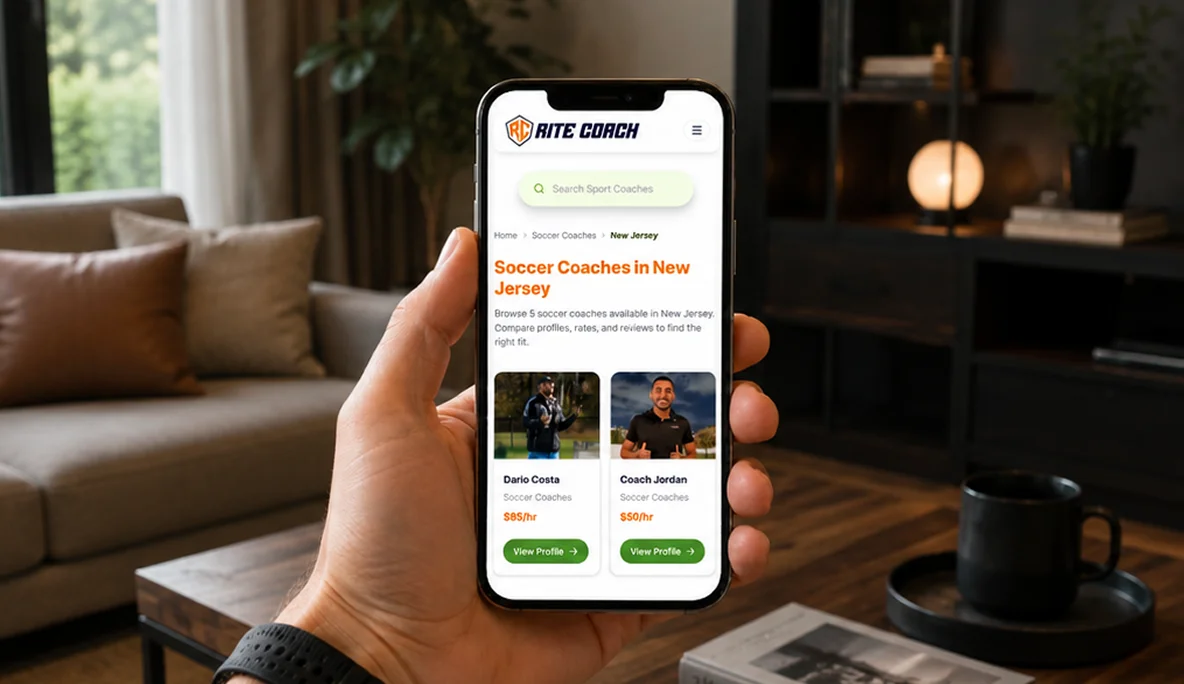
Step 2
Search & Discover
Browse coaches by sport, location, and training focus across New Jersey.
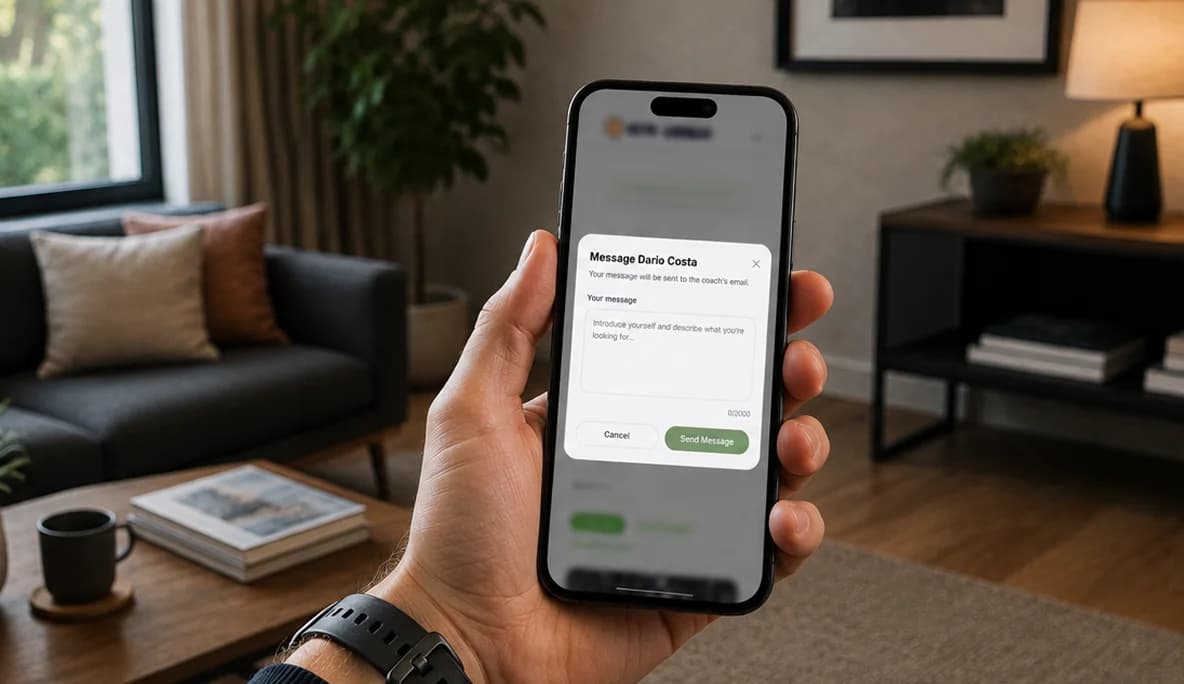
Step 3
Connect Directly
Message coaches directly to discuss goals, scheduling, and fit.
Step 4
Train With Confidence
Choose the coach that fits your child’s needs and take the next step in their development.
Frequently Asked Questions
Common questions about personal trainer coaching in New Jersey.
Browse the trainers listed in this category, read their background, the ages they work with and where they train, and contact them directly to set up a first session. Listings are grouped by the trainer's home town in New Jersey.
Each trainer sets their own rate and shows it on their profile. Rite Coach charges no commission and no booking fee. Ask whether a gym or facility fee is added on top of the session rate.
Many children can start simple, supervised work around seven or eight, using body weight and play-based drills. Formal lifting usually comes later. Each profile lists the age groups the trainer works with.
Often, yes. Small groups of two to four athletes of similar age and ability work well for speed, agility and conditioning. Learning a new lift tends to go faster one on one.
Not yet. Personal training is one of the newer categories on Rite Coach, and listings are still being added. Trainers are listed by their home town, not by every gym, park or home they travel to, so a single listing can cover families across several nearby towns. If you do not see someone close to you, coaches in other categories, especially track and field, football and wrestling, often include strength, speed and conditioning work in their sessions, so read their profiles too. It is also worth checking back, because the category is still growing.
Usually three things. First, an assessment: how the athlete squats, lunges, jumps, lands and runs, and where they are tight, weak or uneven from side to side. Second, a plan built around their sport and season, mixing strength, speed, mobility and conditioning in proportions that change through the year. Third, teaching, because a young athlete needs to learn why a movement matters and how it should feel, not just copy it. A typical session has a warm-up, a movement skill block, strength work and a short finisher. Ask a trainer to explain the plan in plain language before you start.
No, and the difference matters when you choose. A sport coach teaches the skills of one game: shooting, throwing, footwork, tactics. A personal trainer works on the body that plays it: strength, power, speed, mobility, endurance and resilience against injury. Some coaches do both, and some trainers specialize in one sport's demands. A soccer player who keeps getting beaten to the ball may need a speed program more than another skills lesson, while a player with poor technique will not fix it in a weight room. Ask what the trainer will not cover, as well as what they will.
Sometimes, but only in the right order. The first steps after a real injury, such as a torn ligament, a fracture or a concussion, belong to a doctor and usually a physical therapist. A personal trainer fits in later, once the athlete is cleared for training, to rebuild strength and confidence and bridge the gap back to full practice. A good trainer will ask for the clearance and any restrictions in writing and will stay inside them. Be wary of anyone who promises to replace physical therapy or speed up a doctor's timeline. Ask how they work with a medical team.
No. Plenty of teenagers who have stopped playing organized sports, or never started, want to get stronger, fitter or more confident in their bodies, and a trainer who works with young people can help. Sessions for a non-athlete look different: less about speed for a position, more about building a habit, learning basic lifts safely and finding exercise the teenager actually enjoys. That last part matters most, because a program a teenager dreads will not last. Ask a trainer how they keep sessions varied, and let your teenager meet them before you commit to a package.
It depends on the season. In the off-season, two sessions a week is a common rhythm for building strength, with simple homework in between. In season, many trainers drop to one short session a week, or every other week, to maintain strength without adding fatigue before games. Before a big season, some athletes do a focused block of six to eight weeks. More is not always better for a growing body, and rest days are part of the program, not a break from it. Ask a trainer how they will adjust the plan when your child's team schedule changes.
It varies by trainer. Some work out of a private gym or training studio, some rent space by the hour, and many travel to a family's home, a driveway or a local park with portable equipment such as bands, kettlebells, cones and a speed ladder. A great deal of youth training needs little more than that. Heavier barbell work needs a proper rack and platform, so ask where that part happens if your athlete is older and ready for it. Each profile lists where the trainer runs sessions. Ask whether any facility fee is added to the session rate.
Look for a recognized certification in personal training or strength and conditioning, current CPR and first aid, and real experience with young people, which is different from training adults. Some trainers hold degrees in exercise science or kinesiology, and some have coached high school or college strength programs. Credentials are a starting point, not a guarantee. Watch a session and notice whether the trainer corrects form, explains why, and adjusts when a child struggles. Ask how many athletes in your child's age group they have worked with, and what a typical program looks like for them.
Ask the trainer what they will measure and how often. Good trainers test something specific at the start, such as a broad jump, a timed sprint, a number of push-ups with good form, or a lift at a set number of repetitions, and repeat it every four to six weeks. Expect early gains to come from better technique rather than visible muscle, especially before puberty. Fewer nagging aches, better posture and more confidence count too. A trainer who shares numbers without being asked is usually well organized. Ask how and when they will report progress to you.
No. Elite athletes often get the most attention, but the biggest benefits usually go to ordinary players: the freshman who is smaller than everyone else, the athlete who keeps rolling an ankle, the teenager returning to sport after a year off, or the kid who plays three seasons and never builds a base of strength. A good program meets the athlete where they are. That said, training will not turn every player into a starter, and no honest trainer will promise it. Ask a trainer what results are realistic for your child in the first three months.