
Private Personal Trainers in Bergen County, NJ
Browse 1 personal trainer available in Bergen County, NJ. Compare profiles, rates, and reviews to find the right fit.
Private Personal Trainers in Bergen County, NJ
Private Personal Training in Bergen County
Bergen County is the most populous county in New Jersey, split into seventy municipalities, with Hackensack as its county seat and towns such as Paramus, Teaneck and Fort Lee a few minutes apart. That density shapes youth sports here.
Read moreRead less
Rec leagues, school teams and travel clubs run year round, and plenty of Bergen athletes play one sport through the school year and another in the summer. What gets squeezed is the work no team has time for: building strength safely, getting faster, staying mobile and recovering properly. A personal trainer who works with young people covers that, from a first strength program for a middle schooler to off-season speed work for a varsity player, or a supervised return to training after an injury once a doctor has signed off. Personal training is one of the newer categories on Rite Coach. Coaches list their background, the age groups they train, their hourly rate, and where they run sessions.
- 1 coach listed
- Coaches in 1 towns
- Message coaches directly, no booking fees
Where to play
1,447Courts and fields in Bergen CountyMap and directionsBrowse Personal Trainer by Town in Bergen County
Other Sports Coaches in Bergen County
Does My Child Need a Personal Trainer or a Coach for Their Sport?
It depends on what is actually holding them back, and that is worth figuring out before you pay for either. If the problem is skill, such as a poor shot, weak footwork or slow decisions, a sport coach is the better use of the hour.
Read moreRead less
If the problem is the body, such as getting knocked off the ball, fading late in games, a tightness that keeps returning, or simply being smaller than teammates before a growth spurt, a trainer may help more. In a county as busy as Bergen, many families try to add both on top of team practice and end up with a child who is tired all the time. The honest caveat is that one hour a week of either cannot fix everything, and the athlete still needs rest. Ask your child's team coach what they see first, then ask a trainer whether that is something they can address.
How it Works
Simple, transparent steps to connect coaches and athletes.
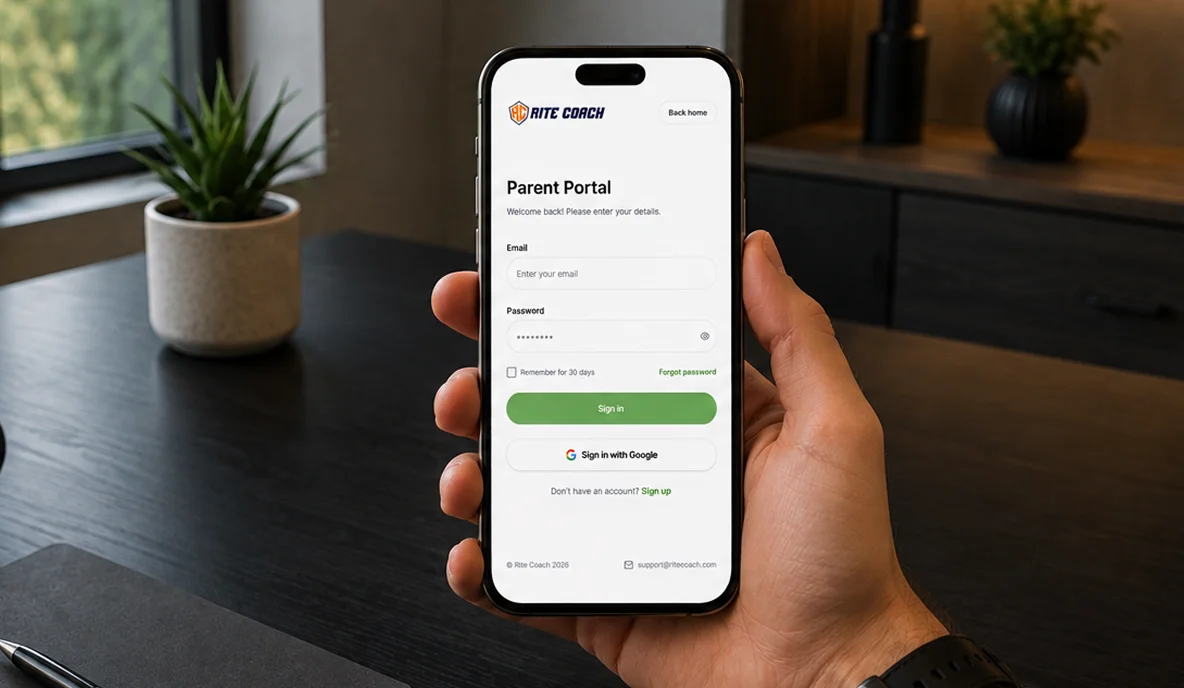
Step 1
Create Your Profile
Parents create a profile and start finding the right coach in seconds.
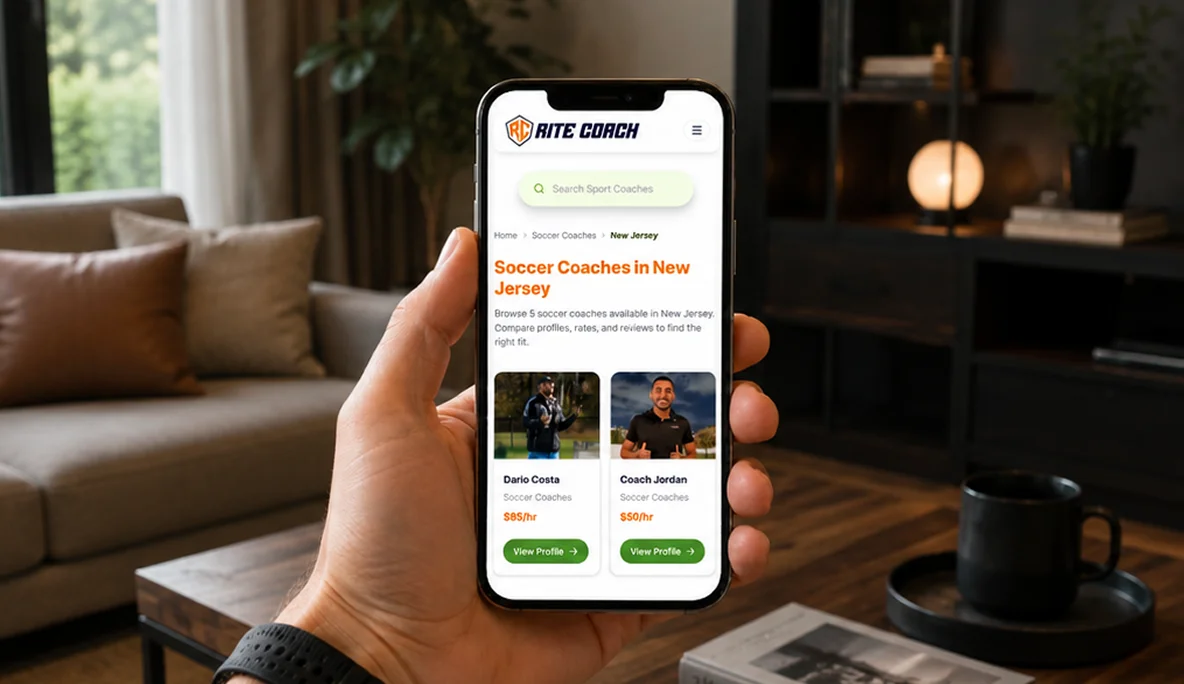
Step 2
Search & Discover
Browse coaches by sport, location, and training focus across New Jersey.
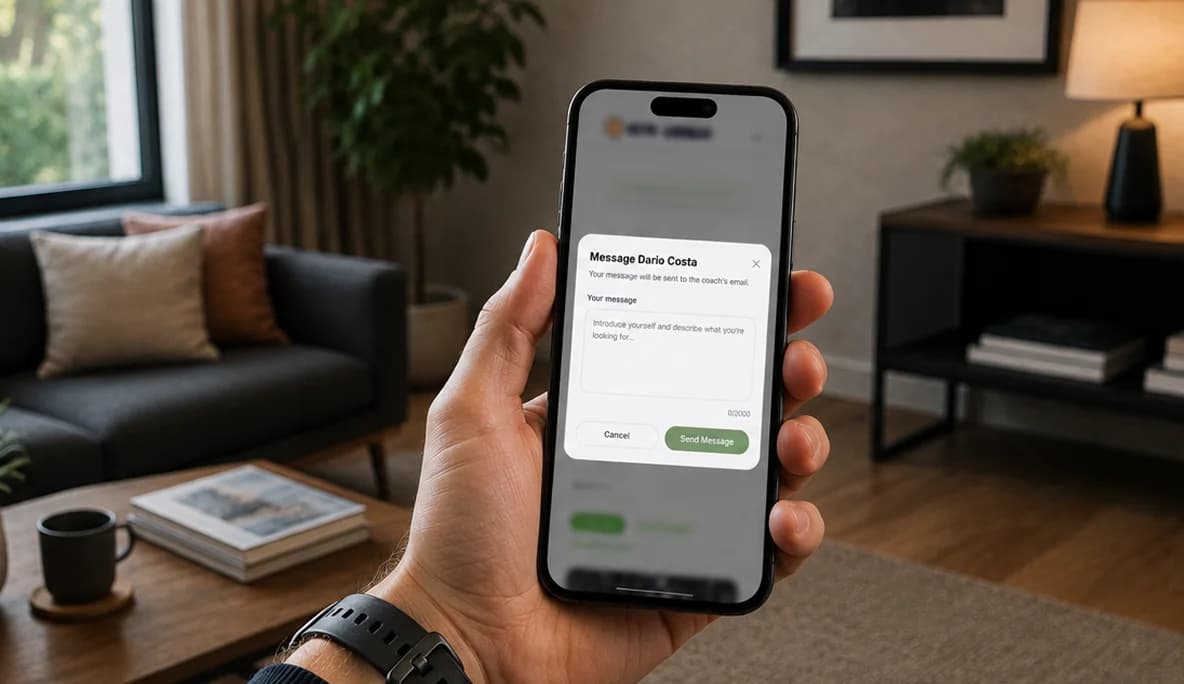
Step 3
Connect Directly
Message coaches directly to discuss goals, scheduling, and fit.
Step 4
Train With Confidence
Choose the coach that fits your child’s needs and take the next step in their development.
Frequently Asked Questions
Common questions about personal trainer coaching in Bergen County, NJ.
Browse the trainers listed for Bergen County on Rite Coach, read their background, the ages they train and where they work, and contact them directly to arrange a first session.
Each trainer sets their own rate and lists it on their profile. Rite Coach charges no commission and no booking fee. Ask whether a gym or studio fee is added on top of the session rate.
Some do. Younger athletes usually start with body weight, coordination and landing mechanics before any loaded lifting. Each profile lists the age groups the trainer works with.
Some will, bringing bands, kettlebells and cones, which is enough for a lot of youth training. Others work only from a gym. Each profile says where sessions take place.
Not yet. Personal training is a newer category on Rite Coach, and the Bergen County listing is still small. Trainers are listed by their home town, not by every town they travel to, and in a county of seventy small municipalities a trainer based in one borough often works with families in several others. Trainers in neighboring Passaic, Hudson and Essex counties may also cover parts of Bergen. Coaches in other categories, such as track and field or wrestling, sometimes include strength and conditioning in their sessions, so their profiles are worth reading. Check back as the category grows.
Mostly assessment, with some training. The trainer asks about the athlete's sport, season, injury history and goals, then watches basic movements: a squat, a lunge, a push-up, a jump and landing, and a short sprint or shuttle. Those show where the athlete is strong, where they compensate and whether one side lags behind the other. From there, a good trainer picks two or three priorities instead of fixing everything at once. Expect light homework, such as a short mobility routine. Ask the trainer what they noticed and how the first month of the plan addresses it.
Supervised, age-appropriate resistance training is considered safe for children and teens by major pediatric and strength and conditioning organizations, and the idea that lifting stunts growth is not supported by the research. Most injuries come from poor technique, too much weight or no supervision at all. A careful trainer teaches movement first, starts with body weight and light loads, and progresses slowly. Growth spurts can temporarily affect coordination and flexibility, so a good program adjusts during them rather than pushing through. Ask a trainer how they decide when an athlete is ready for heavier weights.
Yes, once the athlete is cleared. Diagnosis and early rehabilitation belong to a doctor and usually a physical therapist. A personal trainer helps afterward, rebuilding strength, balance and confidence so the athlete can handle full practice again. Get the clearance and any restrictions in writing, and share them with the trainer before the first session. A trainer who works well with young athletes will respect those limits and may ask to speak with the therapist. Be skeptical of anyone who suggests skipping physical therapy or rushing a doctor's timeline. Ask how they handle a setback during training.
Carefully. Many young athletes here already have school practice most weekdays, plus weekend games or a club team. Adding heavy workouts on top can leave them sore and slow when it matters. Trainers who work with youth athletes usually build the hardest work into the off-season and switch to shorter maintenance sessions during the season, often once a week or less. Sessions the day before a game should be light. Share the full team calendar with the trainer at the start, and ask how they would change the plan in a week with three games.
A recognized certification in personal training or strength and conditioning, current CPR and first aid, and experience with young people, which is a different job from training adults. Look for someone who explains things simply, corrects form patiently and is not trying to exhaust the athlete in every session. Ask how many athletes your child's age they have trained, how they structure a season and what they do if your child feels pain during a session. Reviews from other families help. A single trial session before a package is a sensible way to test the fit.
Yes. Some of the teenagers who benefit most are not on any team. They may want to get stronger, feel more confident, manage stress or just find a form of exercise they like. A trainer can teach safe basic lifts, build a routine that fits around school and keep the teenager accountable. The focus should be on habits and enjoyment rather than performance numbers, because a program that feels like punishment rarely lasts. Ask a trainer how they keep sessions varied, and let your teenager meet them first, since the relationship matters as much as the plan.
Strength often improves in the first four to six weeks, mostly because the athlete learns to move better rather than because they build visible muscle, especially before puberty. Speed and conditioning changes can show up in a similar window if training is consistent. Bigger changes in power and body composition take months, not weeks. Missed sessions, poor sleep and a packed team schedule all slow progress. A good trainer tests something measurable at the start, such as a jump, a sprint or a lift, and repeats it regularly. Ask what they will test and when you will see the results.
Both can work. One-on-one sessions suit an athlete learning new lifts, returning from injury or working on a specific weakness, because the trainer watches every repetition. Training with a friend or teammate of similar age and ability adds motivation and may lower the cost per athlete, and it suits speed, agility and conditioning work well. Groups larger than four make it hard to coach technique closely. If your child is nervous about starting, a friend can make the first few weeks easier. Ask a trainer whether they offer small group sessions and how they split their attention.
Comfortable athletic clothes, supportive sneakers suited to running and lifting, a water bottle and a small snack if the session is right after school. Cleats are only needed if the trainer plans field work. Outdoor sessions in Bergen can turn cold and windy in the late fall and winter, so pack a layer. Let the trainer know about any medical condition, allergy or recent injury before the first session. Ask whether the trainer brings all the equipment, or whether you should buy anything, such as a resistance band, for homework between sessions.