New Jersey coaches: create your free profile by Sept 30 for a chance to win a $150 Dick’s Sporting Goods eGift card.

Enter nowOfficial Rules

Private Wrestling Coaches & Trainers

Work one-on-one with a private wrestling coach. Compare experience, hourly rates, and parent reviews, then reach out directly. No commission, no booking fees.

Currently serving New Jersey

Private Wrestling Coaches & Trainers

Unclaimed Profile

This profile was created by RiteCoach on behalf of the coach. The coach has not yet claimed the profile.
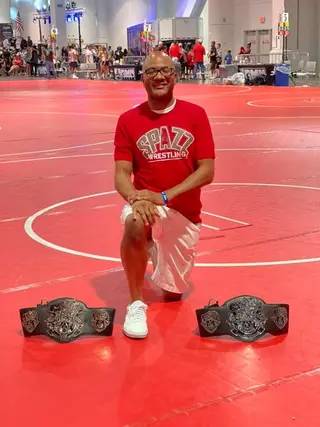
Brian Miller, Wrestling Coaches in New Jersey

Brian Miller

Wrestling Coaches

$50/hr

View Profile

Private Wrestling Coaching

Wrestling practice is crowded by nature. A room of thirty wrestlers pairs off, drills a move, and the coach circulates, which means most wrestlers get a few seconds of correction on each technique before the whistle moves everyone on. Private wrestling coaching changes that. In a one-on-one session a coach can drill the same single leg, stand-up, or half nelson dozens of times, feel exactly where the position breaks down, and fix it on the spot, because the coach is usually the one wrestling with the athlete. That is where small details, a head position, a hand placement, the angle of a finish, get cleaned up. Most private work in the United States focuses on folkstyle, the style used in school wrestling, with freestyle and Greco-Roman available from some coaches. On Rite Coach you can compare wrestling coaches by background, the age groups they train, and their hourly rate, then contact them directly. There is no commission and no booking fee. Rite Coach currently serves families across New Jersey.

Browse Wrestling Coaches by Location

Coaches are listed in 1 of New Jersey's 21 counties so far. Don't see yours? Search by town above, or open the nearest county listed. New coaches are added every week.

Can You Really Train Wrestling Without a Practice Partner?

Yes, because in private wrestling the coach usually is the partner. Most coaches wrestle live with the athlete at a controlled pace, feeding positions and adding resistance only when the technique is ready for it, which is often more useful than drilling with a teammate of a different size and skill level. Some coaches also bring in a second wrestler for live goes or run small groups of two or three. The real requirement is space: wrestling needs mats, so sessions typically happen at a club, a gym with a mat room, or with a coach who brings roll-out mats to a garage or basement. Ask a coach where they train, whether they wrestle with athletes themselves, and whether they add partners for live work as a wrestler progresses.

Frequently Asked Questions

Common questions about wrestling coaching in New Jersey.

Browse wrestling coaches on Rite Coach, compare their background and the age groups they train, and contact them directly to arrange sessions.
Each coach sets their own rate, listed on their profile for comparison. Rite Coach takes no commission and charges no booking fee.
No. Coaches work with beginners learning the basics as well as experienced wrestlers preparing for tournaments, and list the levels they coach on their profiles.
Wherever there are mats, usually a wrestling club or gym. Some coaches bring mats to a home. Confirm the location directly with a coach.
Not necessarily. Rite Coach is still growing, and coaches are listed by their home base rather than every area they cover. Wrestling coaches often run sessions at a club that draws wrestlers from across a region, so a coach listed in one town may be a short drive from you. Check each coach's profile for where they train, and contact them directly to ask whether they work with wrestlers near you.
Usually a warm-up with stance and motion work, then technique drilling on one or two areas such as takedowns, escapes, or top control, then situational wrestling where the coach sets up a position and the athlete works out of it. Some sessions end with live goes or conditioning. A first lesson often doubles as an assessment. Ask a coach how they structure the hour and how much live wrestling is involved.
Many youth wrestling programs start children around five or six, with an emphasis on movement, balance, and simple positions rather than competition. Private lessons tend to make more sense a little later, once a child has some mat experience and wants to improve specific skills. Each coach lists the age groups they train, so look for one who regularly works with your child's age.
Folkstyle is the style used in American school and college wrestling, with an emphasis on control, riding, and escapes. Freestyle and Greco-Roman are the international Olympic styles, scored differently and wrestled more in spring and summer. Greco-Roman does not allow attacks below the waist. Most youth wrestlers start in folkstyle. Ask a coach which styles they teach and how they fit off-season freestyle into a wrestler's year.
It is a contact sport, so there is some injury risk, but well-run youth wrestling is structured and closely supervised. Coaches teach safe positions and how to fall, and match partners by size and skill. Private lessons can be lower risk than crowded practice because the coach controls the intensity. Ask a coach how they handle live wrestling with younger athletes and what they do to keep sessions safe.
No, and young wrestlers should not. Weight classes exist so athletes compete against others their size, not so they diet down. School wrestling programs have rules on weight management designed to prevent unhealthy cutting, and a responsible coach will focus on skill, strength, and wrestling at a natural weight. If a coach pushes weight cutting for a child, that is a clear red flag.
Wrestling shoes and fitted athletic clothing to start, plus headgear, which protects the ears and is required in school competition. A singlet is only needed for matches. Clean clothing and good hygiene matter in wrestling because skin infections can spread on shared mats, so wash gear after every session. Check with the coach whether headgear is required for private lessons.
It depends on the goal. The offseason, spring through fall, is when a wrestler can learn new technique and build strength without the grind of a competition schedule. During the winter school season, private lessons are usually shorter and targeted at problems that show up in matches. Many wrestlers do more private work in the months leading into the season. Ask a coach how they plan around the school calendar.
It is often recommended for that reason. Wrestling builds balance, body control, grip and core strength, conditioning, and mental toughness that carry into football, lacrosse, baseball, and many other sports. Plenty of multi-sport athletes wrestle in winter. Tell a coach about your child's other sports so they can emphasize the movement and strength work that transfers best.
Ask about their wrestling and coaching background, which styles they teach, how much live wrestling a session includes, and how they approach weight management. A good coach teaches technique patiently, controls intensity for younger athletes, and does not promote unhealthy weight cutting. Look for experience with your child's age group, and book one session before committing to a package.
It depends on the time of year. In the offseason, once or twice a week is common for a wrestler learning new technique or building strength. During the school season, wrestlers already practice most days and compete on weekends, so a private session every week or two to fix specific problems is usually plenty. Stacking too much on top of a full season risks fatigue, injury, and burnout. Share the school and club schedule with the coach so they can recommend a sensible pace rather than simply booking as many sessions as possible.