Basketball Practice Plan: A 60-Minute Template for Private Training
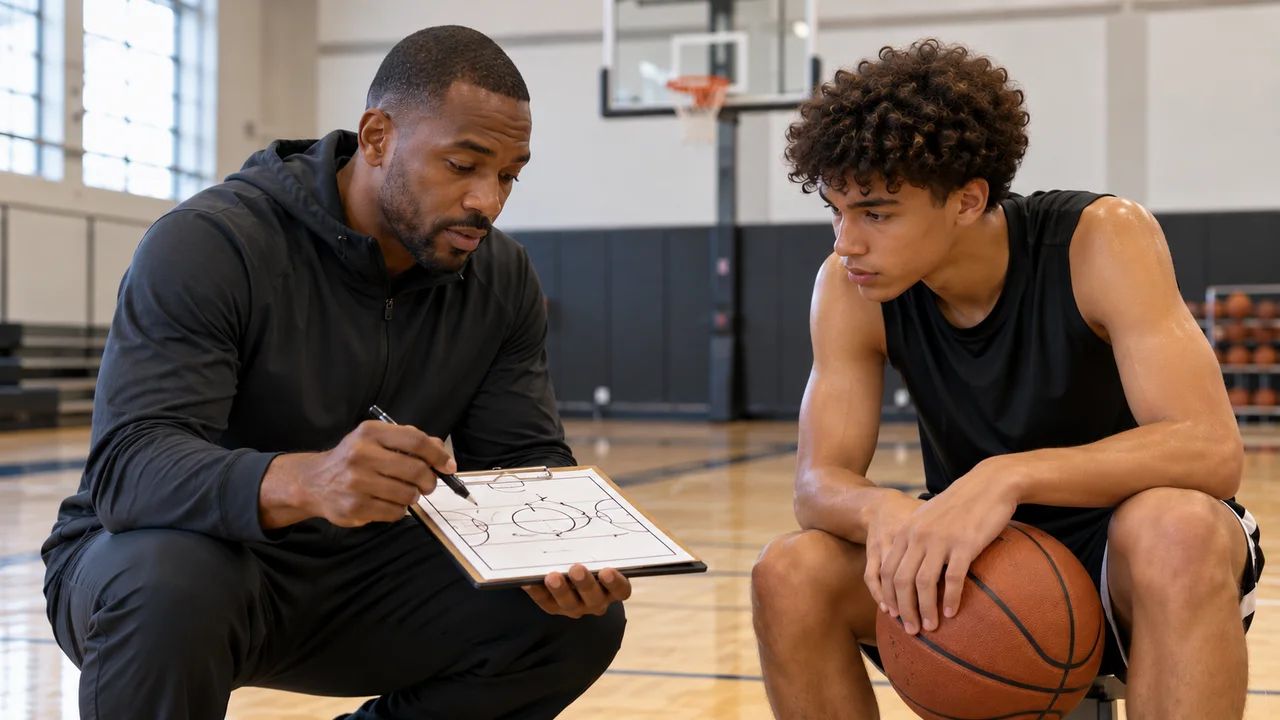
The difference between a basketball session that makes a player better and one that just makes them tired is almost always the plan. Without one, an hour drifts: a long warm-up, a few favorite drills, some shooting, and a player who leaves sweaty but no different. With one, the same hour builds on last week, targets what the player actually needs, and ends with homework that carries the work forward.
This guide gives private trainers and small-group coaches a 60-minute basketball practice plan template, explains why each block is where it is, shows how to adapt it by age and for groups, and covers the mistakes that waste court time.
Why Private Sessions Need a Different Plan
Most published basketball practice plans are built for teams: offensive sets, defensive rotations, and scrimmages. A private or small-group session has a different job. There is no team to install a system for. The value is individual skill development at a pace and level of detail a team practice cannot offer.
That means a private plan should be:
- Specific to one player. Built around their position, level, and the gaps you have identified.
- High in touches. Every minute the ball is in their hands should count.
- Progressive. Moving from technique to game speed within the session, and building from one session to the next.
- Measurable. Including at least one tracked number so progress is visible to the player and the parent.
The 60-Minute Template
Here is the structure at a glance, followed by what goes in each block.
- Dynamic warm-up (7 minutes)
- Ball handling (10 minutes)
- Footwork and finishing (12 minutes)
- Shooting (20 minutes)
- Compete and condition (7 minutes)
- Cool-down and homework (4 minutes)
Block 1: Dynamic Warm-Up (0:00 to 0:07)
Seven minutes of movement preparation without the ball: light jogging, high knees, butt kicks, lateral shuffles, carioca, leg swings, and a few short accelerations. Finish with some ball slaps and stationary pound dribbles to wake up the hands.
Keep it brisk and consistent from session to session. A fixed warm-up saves decision time and teaches the player a routine they can use before games.
Block 2: Ball Handling (0:07 to 0:17)
Ten minutes, split into stationary work and movement.
- Stationary (4 minutes). Pound dribbles, crossovers, between the legs, and behind the back, alternating hands, with eyes up.
- Two-ball dribbling (2 minutes). Together and alternating, to force the weak hand to keep pace.
- On the move (4 minutes). Change-of-pace and change-of-direction dribbling up the floor, using cones or chairs as defenders.
Handling comes early while the player is fresh, because fine motor control degrades with fatigue.
Block 3: Footwork and Finishing (0:17 to 0:29)
Twelve minutes on getting to the rim and scoring.
- Mikan drill (2 minutes). Alternating layups under the basket for touch with both hands.
- Jump stops and pivots (3 minutes). Attack, stop on balance, and pivot into a pass or finish.
- Finishing package (7 minutes). Layups from both sides with the correct hand and foot, then a progression of reverse layups, inside-hand finishes, and a Euro step or pro hop, depending on level. Add a pad or light contact for older players.
Block 4: Shooting (0:29 to 0:49)
The largest block, twenty minutes, moving deliberately from form to game speed.
- Form shooting at the rim (4 minutes). One-hand shots close in, building a repeatable release.
- Catch-and-shoot (6 minutes). Feet set on the catch, from spots matched to the player's range and position.
- Off the dribble (6 minutes). One- and two-dribble pull-ups going both directions.
- Tracked shooting (4 minutes). A fixed test, such as ten shots from five spots, with makes recorded.
That last step is the one most trainers skip, and the one parents value most. For more shooting progressions, see our guide to basketball shooting drills that transfer to games.
Block 5: Compete and Condition (0:49 to 0:56)
Seven minutes of game-like pressure while tired. Options include one-on-one from specific spots with a limited number of dribbles, a make-it-take-it finishing game, or conditioning shooting such as a sprint to half court followed by a free throw. Shooting when fatigued is the skill games actually test.
Block 6: Cool-Down and Homework (0:56 to 1:00)
Four minutes of light stretching and, most importantly, a clear assignment. Give the player two or three specific drills tied to today's focus to practice before the next session, with how long and how often. Tell the parent too.
How to Adapt the Plan by Age
Ages 8 to 11
- Use a lower hoop and the correct ball size.
- Shift time from shooting toward ball handling and footwork.
- Turn drills into games and competitions.
- Keep explanations short, with lots of demonstration.
- Consider 45-minute sessions for younger players.
Ages 12 to 14
- Follow the template closely, with a strong emphasis on the weak hand.
- Introduce basic reads, such as attacking a closeout.
- Start tracking numbers consistently.
High School
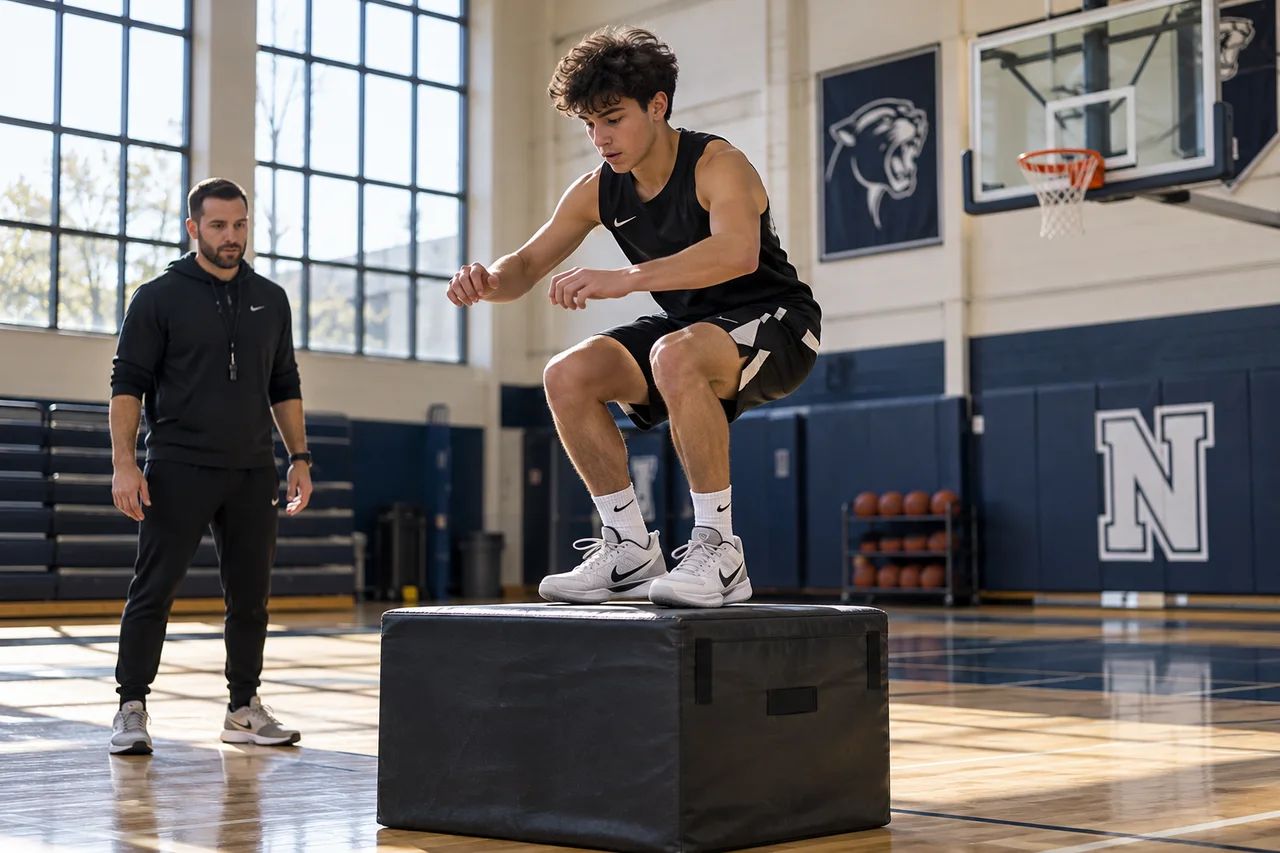
- Increase game speed, contact, and fatigue.
- Build shooting volume from position-specific spots.
- Tailor finishing and footwork to how the player is actually used on their team.
- Coordinate around the team schedule, going lighter in season.
Adapting for Small Groups
With two to four players, the structure stays the same, but you manage time and touches differently.
- Group by level, not by friendship. A large gap in ability shortchanges everyone.
- Use stations. Run ball handling or form shooting as rotating stations so nobody waits.
- Add passing. Groups make passing, catching, and cutting drills possible.
- Expand the compete block. Two-on-two and small-sided games become valuable.
- Track numbers individually. Each player should still leave with their own score and homework.
Planning Across Sessions
A single good session does little. The progress comes from a sequence. A simple approach is to plan in four-week blocks with one primary focus, such as weak-hand finishing or shooting off the dribble, while keeping the rest of the template for maintenance. Retest the tracked numbers at the end of each block, share the results with the parent, and choose the next focus.
Keep brief notes after every session: what you worked on, what improved, what to address next, and the homework you gave. It takes two minutes and makes you noticeably better at your job.
Common Mistakes That Waste Court Time
- Long warm-ups. Court time is often rented. Keep warm-ups efficient.
- Too many drills. A few drills done well beat a dozen done once.
- No game speed. Skills practiced only slowly rarely show up in games.
- No tracking. Without numbers, progress is guesswork.
- No homework. One session a week cannot do the job alone.
A Plan Is Also a Selling Point
Parents paying for private training want to know what they are paying for. A trainer who can explain the structure of a session, share progress numbers, and send clear homework stands out immediately from one who just runs drills. That professionalism is also what earns referrals.
If you train players in New Jersey, you can list your background, the ages you coach, and your rates on Rite Coach, so families looking for private basketball training can find and contact you directly, with no commission. Create your coach profile.
Frequently Asked Questions
How long should a private basketball session be?
Sixty minutes is standard. Forty-five minutes often works better for younger players, and ninety minutes can suit advanced high school players or small groups.
How much of a session should be shooting?
For most players about a third, but adjust based on age and needs. Younger players usually benefit from more ball handling and footwork.
Looking for a private basketball coach?
Rite Coach lists coaches across New Jersey.