Basketball Shooting Drills That Actually Transfer to Games
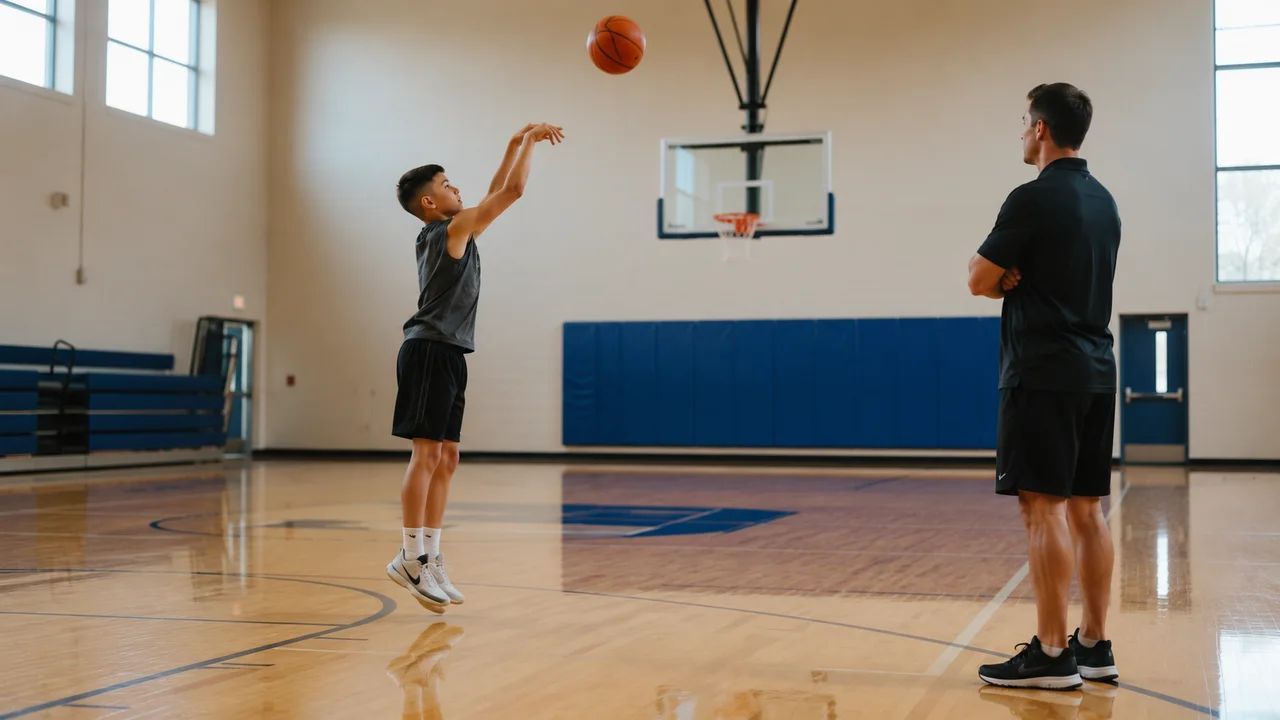
Most young players do not have a shooting problem. They have a repeatability problem. They can make ten in a row unguarded and then miss badly off a curl with a hand in their face, and the gap between those two things is what drills are supposed to close.
Here are the drills worth your practice time, roughly in the order a player should meet them.
Start With Form, Close to the Rim
Form shooting, one hand, five spots. Three feet from the rim, guide hand off the ball entirely. Ten makes at each of five spots. The point is not the make. It is feeling the ball come off the index and middle finger with the elbow under it.
Do this at the start of every session for the rest of the player's career. Shooters who skip it develop a guide hand thumb flick that is miserable to fix later.
The Mikan drill. Not a shooting drill in the strict sense, but it belongs here. Alternating hand finishes at the rim, continuous, thirty to sixty seconds. It builds touch and footwork around the basket, and it is the fastest way to make a young player comfortable finishing with the off hand.
Wall form checks. Player shoots into a wall from six feet, focusing only on backspin and release point. Removes the make or miss feedback entirely so they attend to the motion.
Build in Game Movement
The moment form is stable, shots need to start looking like game shots.
One two step into the catch. A partner or coach passes, the shooter steps into it with a consistent footwork pattern and shoots. Ten from five spots. Almost every missed catch and shoot attempt in a youth game is a footwork problem, not a hand problem.
Curl into the shot. Player runs a tight curl off a chair or cone, receives, squares and shoots. Adds the body rotation that catches so many players out.
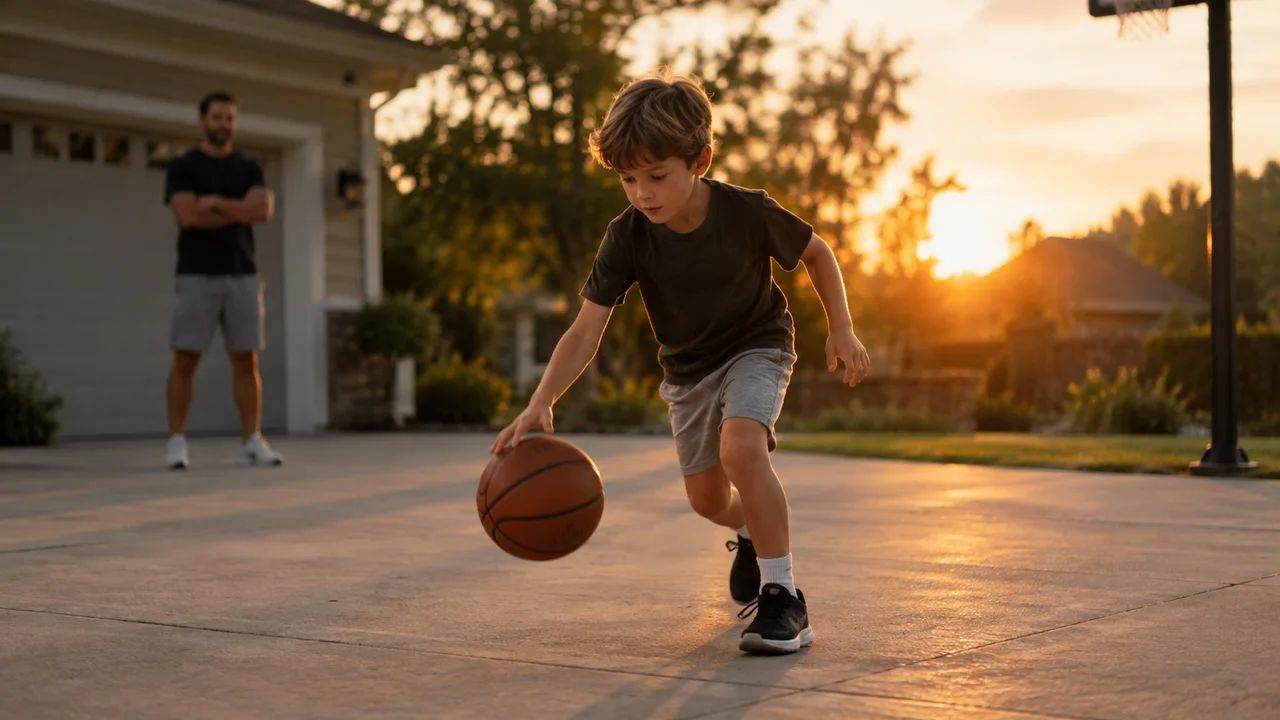
Pull up off two dribbles. Right, left, both directions, from the wing and the top. This is the shot most young guards actually take in games and the one they practise least.
Relocate and shoot. Shoot, then immediately move to a new spot for the next pass. Teaches players to keep moving after releasing, which is half of getting open.
Add Fatigue and Pressure
A shot that only exists at rest does not exist.
Five in a row to leave. Player must hit five consecutive from a spot before moving on. Introduces the mild pressure of a streak without making it feel like punishment.
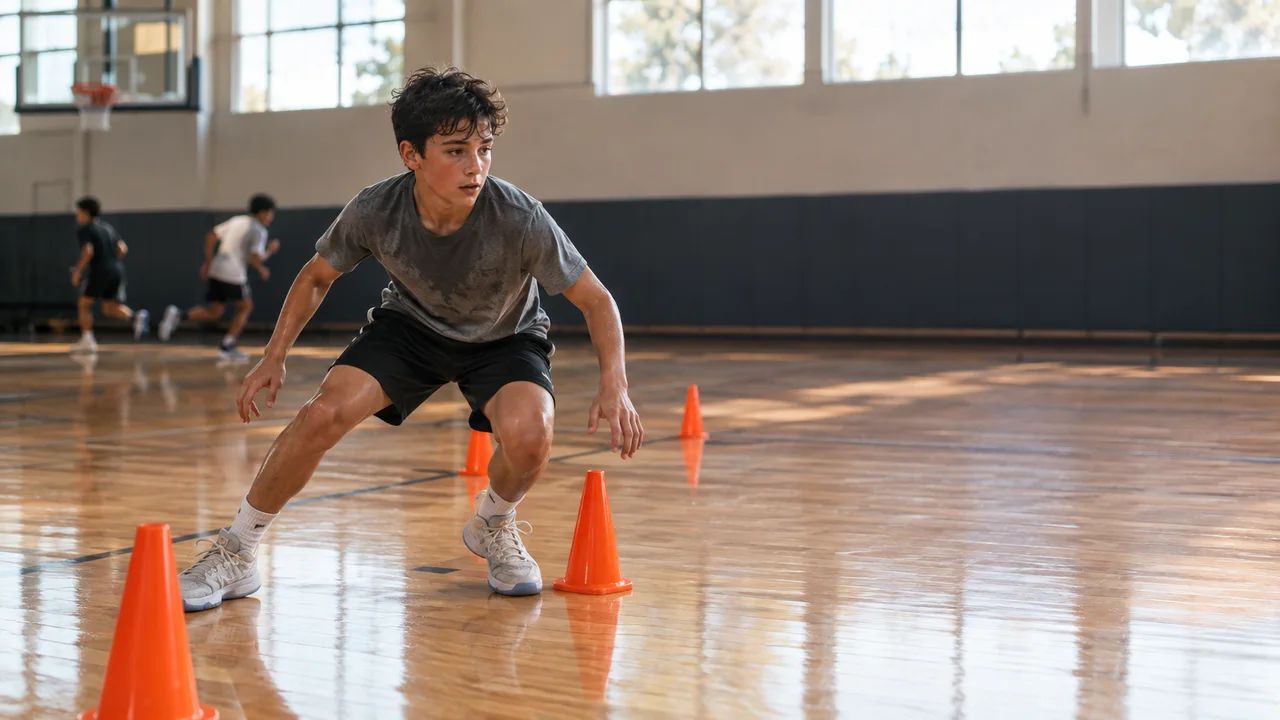
Beat the clock. Sixty seconds, count makes from mid range, sprint to touch the baseline every five shots. This is where shooting and conditioning meet, and it is worth pairing with dedicated basketball conditioning drills once a week.
Contested catch and shoot. A coach closes out with a hand up, no block attempt. The player learns to hold form with a body coming at them, which is the actual skill.
Free throws between everything. Two free throws after every conditioning block. Shooting tired with a settled mind is a separate skill from shooting tired on the move.
The Three Form Errors Worth Watching For
Guide hand interference. If the ball spins sideways, the off hand is pushing. One hand form shooting fixes it.
Fading on a stationary shot. Usually a strength issue. Move them closer to the rim rather than letting them build a fade into their base shot.
Inconsistent release point. If the ball is released from a different height each time, distance control will never be reliable. Film it once from the side and the player will see it immediately.
How to Measure Progress Honestly
Makes out of ten on a good day tells you very little. Better markers:
Makes out of fifty from five spots, same spots every week, logged
Percentage on the second shot after a sprint
Whether form holds on shot forty as well as shot five
A player who goes from 22 to 31 out of fifty over six weeks has genuinely improved. A player who hits eight in a row once has had a nice afternoon.
Keep the log somewhere the player can see it. Visible progress does more for a young shooter's confidence than any amount of encouragement.
Where a Private Coach Fits
Shooting is the clearest case for one on one work in basketball, because form correction needs someone watching every rep. In a team practice a coach sees maybe one shot in twenty from any given player. In a private session they see all of them, and a bad habit gets caught in week one rather than season three.
If you want one to one shooting work, you can compare private basketball coaches by experience, hourly rate and parent reviews, or go straight to basketball coaches in New Jersey. Coaches are listed by town, so it is worth checking your own area: Bergen County, Middlesex County, Passaic County, Somerset County and Sussex County.
Looking for a private basketball coach?
Rite Coach lists coaches across New Jersey.