
Private Personal Trainers in Little Ferry, NJ
Browse 1 personal trainer available in Little Ferry, NJ. Compare profiles, rates, and reviews to find the right fit.
Private Personal Trainers in Little Ferry, NJ
Private Personal Training in Little Ferry, NJ
Little Ferry is a small Bergen County borough of about eleven thousand people on the Hackensack River, with Hackensack, Ridgefield Park, Moonachie and South Hackensack all a few minutes away. It is compact and residential, with a handful of ball fields rather than large parks or sports complexes.
Read moreRead less
For young athletes that means most of their team sports, and many of their teammates, come from a wider stretch of southern Bergen County. Strength and conditioning is the part of athletic development that does not need a big facility. A trainer who works with young people can teach a teenager to squat, lunge, sprint and land safely with little more than a patch of grass and a bag of equipment, and can build a plan around the seasons a child already plays. Coaches list their background, the age groups they train, their hourly rate, and where they run sessions.
- 1 coach listed
- Message coaches directly, no booking fees
Nearby Personal Trainer in Bergen County
Other Sports Coaches in Little Ferry
Does Personal Training for a Young Athlete Need a Gym?
For most of what a young athlete needs, no. Body weight strength, landing and jumping mechanics, sprint technique, agility and mobility can all be taught in a backyard, a driveway or a quiet corner of a park, with bands, cones, a medicine ball and a couple of kettlebells.
Read moreRead less
Many trainers prefer that setup for younger children, because it keeps the focus on movement rather than machines. The caveat is that older, more advanced athletes eventually need heavier loads, and barbell lifts like squats and deadlifts are safest in a proper rack with a platform and a trainer standing close. A borough this size may not have that space nearby, so the heavier part of a program may happen at a gym elsewhere in Bergen. Ask a trainer where sessions will happen now, and where they would move them once your athlete is ready for more.
How it Works
Simple, transparent steps to connect coaches and athletes.
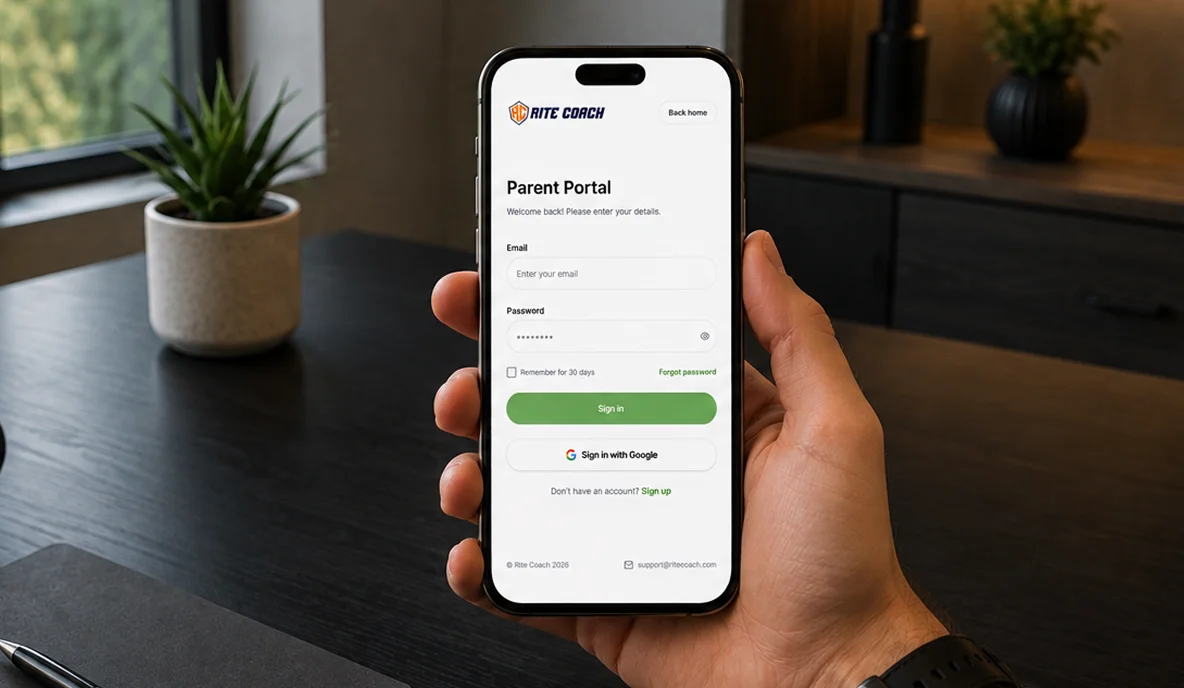
Step 1
Create Your Profile
Parents create a profile and start finding the right coach in seconds.
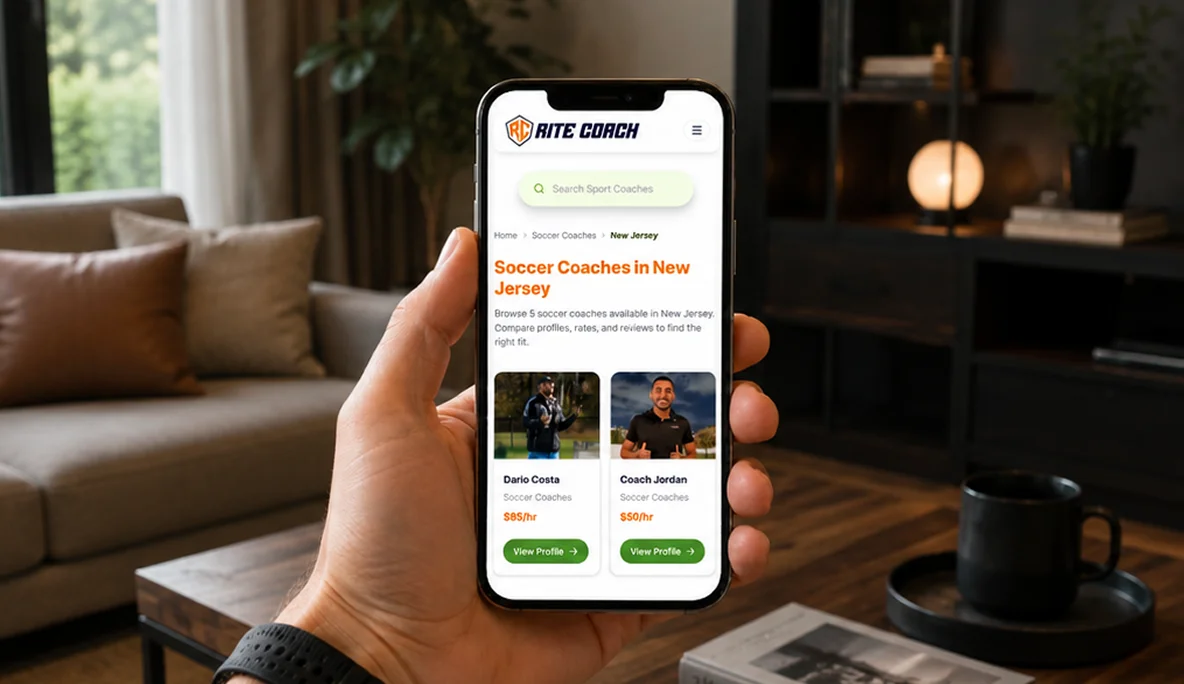
Step 2
Search & Discover
Browse coaches by sport, location, and training focus across New Jersey.
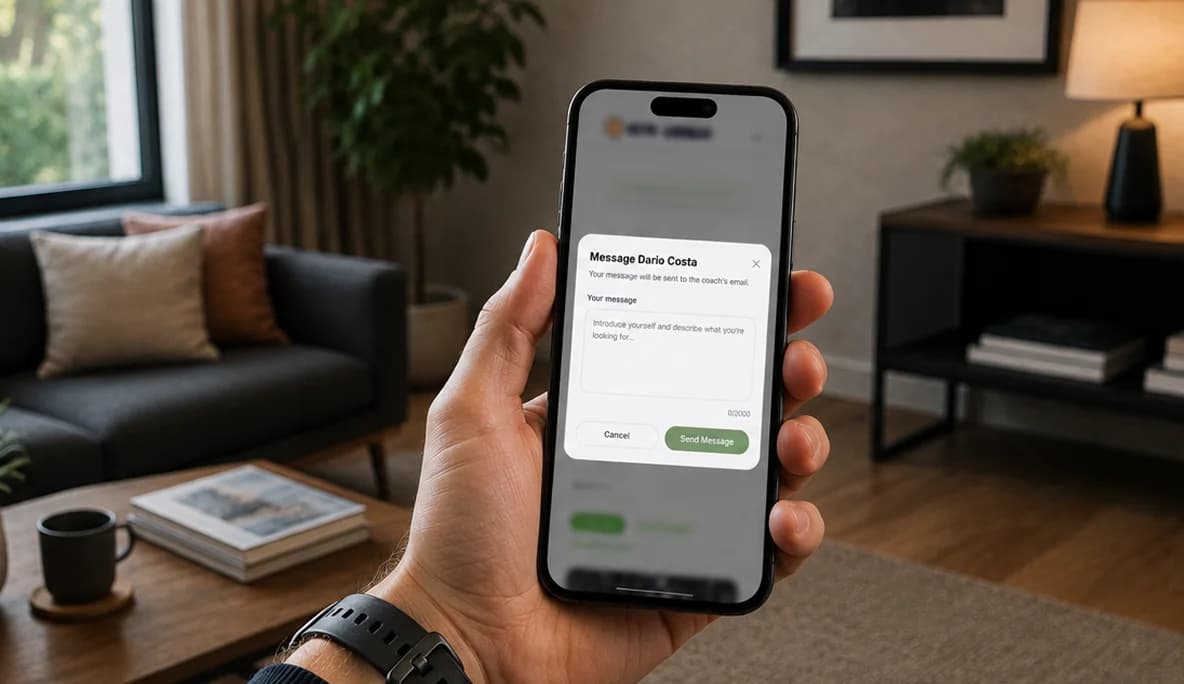
Step 3
Connect Directly
Message coaches directly to discuss goals, scheduling, and fit.
Step 4
Train With Confidence
Choose the coach that fits your child’s needs and take the next step in their development.
Frequently Asked Questions
Common questions about personal trainer coaching in Little Ferry, NJ.
Browse the trainers listed for Little Ferry and the rest of Bergen County on Rite Coach, read their background, the ages they train and where they work, and contact them directly to arrange a first session.
Each trainer sets their own rate and lists it on their profile. Rite Coach charges no commission and no booking fee. If sessions happen at a gym, ask whether a facility fee is added on top.
Some trainers travel with portable equipment and train in a backyard, driveway or garage. Others work only from a gym or studio. Each profile says where the trainer runs sessions.
It varies. Some trainers focus on high school athletes, while others also take younger children for body weight and coordination work. Each profile lists the age groups the trainer works with.
Not necessarily. Trainers are listed by their home town, not by every town they travel to, and personal training is still a newer category on Rite Coach. A trainer based in a neighboring town could easily work with Little Ferry families, since Hackensack, Ridgefield Park, Moonachie, South Hackensack and Carlstadt are all a short drive. Check the Bergen County personal training page for trainers across the county as the listing grows. Coaches in other categories sometimes include strength and conditioning work, so their profiles are worth reading too. Ask any trainer which towns they cover.
It depends on the child, but most programs start with the basics: how to squat, hinge, push, pull, lunge, jump and land with good control. From there a trainer adds the pieces that matter for the athlete's sport, such as acceleration for a soccer player, rotational strength for a softball or baseball player, or shoulder care for a swimmer or pitcher. Mobility and conditioning fill in the rest. A good plan changes with the season, heavier in the off-season and lighter during games. Ask a trainer to show you the first month of the plan and explain why each part is there.
When supervised and matched to the child's age and experience, yes. Major pediatric and strength and conditioning organizations support age-appropriate resistance training for young people, and the long-standing worry that lifting stunts growth is not supported by the research. Injuries tend to come from poor technique, heavy loads and no supervision. A careful trainer teaches each movement with body weight or light resistance first and adds load slowly, only when form holds up. Ask a trainer how they decide when an athlete moves from bands and body weight to dumbbells or a barbell.
Yes, after the medical part is done. A doctor and usually a physical therapist should handle diagnosis and early rehabilitation. Once your child is cleared for training, a personal trainer can rebuild strength and confidence and close the gap between therapy and full team practice. Bring the clearance and any written restrictions to the first session. A good trainer will follow those limits, ask questions when something is unclear and stop if a movement causes pain. Be wary of anyone who suggests skipping therapy or pushing past a doctor's timeline. Ask how they would handle a flare-up.
In the off-season, two sessions a week is a common starting point, with a short routine at home in between. During a team season, many trainers drop to one shorter session a week to maintain strength without making the athlete tired for games. Younger children often do well with one session a week that feels more like play than a workout. Rest and sleep matter as much as the sessions themselves for a growing body. Share your child's full schedule with the trainer, and ask how they would adjust a week that includes several games or tests at school.
It can be. A teenager who wants to get stronger, feel better or build a regular exercise habit can benefit as much as an athlete, sometimes more. The program should look different: less about speed for a position, more about learning safe lifts, building confidence and finding something they enjoy enough to keep doing. Trainers who work well with teenagers listen more than they lecture and keep sessions varied. Pressure about weight or appearance rarely helps. Let your teenager meet the trainer before you commit, and ask the trainer how they would set goals together.
A recognized certification in personal training or strength and conditioning, current CPR and first aid, and real experience training young people, which is different from training adults at a commercial gym. Some trainers also have a degree in exercise science or kinesiology or have coached school strength programs. Paper credentials do not guarantee good teaching, so watch how a trainer explains a movement and corrects a mistake. A good one is patient, specific and willing to slow down. Ask how many athletes your child's age they have trained, and read reviews from other families on their profile.
Usually, yes. Small groups of two or three athletes of similar age and ability work well for speed, agility and conditioning, and a familiar face can make a nervous child more willing to start. Group sessions may also lower the cost per athlete, depending on how the trainer prices them. The trade-off is less individual attention on technique, which matters most when an athlete is learning new lifts or coming back from an injury. Some families mix the two, with occasional one-on-one sessions. Ask a trainer whether they offer group sessions and how many athletes they will take at once.
A good trainer measures something at the start and repeats it every month or so. That might be a standing broad jump, a timed sprint, push-ups with good form, a plank hold or a lift at a set number of repetitions. Early improvement usually comes from better coordination rather than visible muscle, especially in younger children. Fewer aches after games, better posture and more confidence on the field count as progress too. If a trainer cannot tell you what they are tracking, ask them to set a simple test now and share the results with you.
Athletic clothes, supportive sneakers, a water bottle and a small snack if the session comes right after school. If the session is outdoors, add a layer, because fall and winter evenings get cold quickly once the sun goes down. Tell the trainer about any medical condition, allergy or recent injury before you start. Most trainers bring their own equipment, but some ask athletes to buy a resistance band or jump rope for homework between sessions. Ask before the first session so your child is not caught without what they need.