Baseball Hitting Drills for Kids: What to Practice at Home Between Lessons
A hitter improves in the repetitions nobody watches. A team practice might give a young player a couple of rounds of batting practice, and a private lesson might introduce a change to their swing, but the swing only becomes their own after hundreds of focused reps in between. That is the part that happens in a backyard, a garage, or a basement with a net.
This guide covers the hitting drills that work best at home, what each one is actually for, how to set them up safely, and how to tell whether practice is helping or just repeating a flaw.
What You Need
Very little. A batting tee, a net, a bucket of balls, and a bat that fits your child. Plastic training balls or foam balls are useful in tight spaces and for any drill with a parent tossing. If you have limited room, a net in a garage or a quiet corner of the yard covers almost everything below.
One note on bats. A bat that is too heavy is one of the most common reasons young hitters develop long, looping swings. If your child cannot hold the bat straight out to the side for about ten seconds without it dropping, it is probably too heavy for them right now.
Start With the Tee
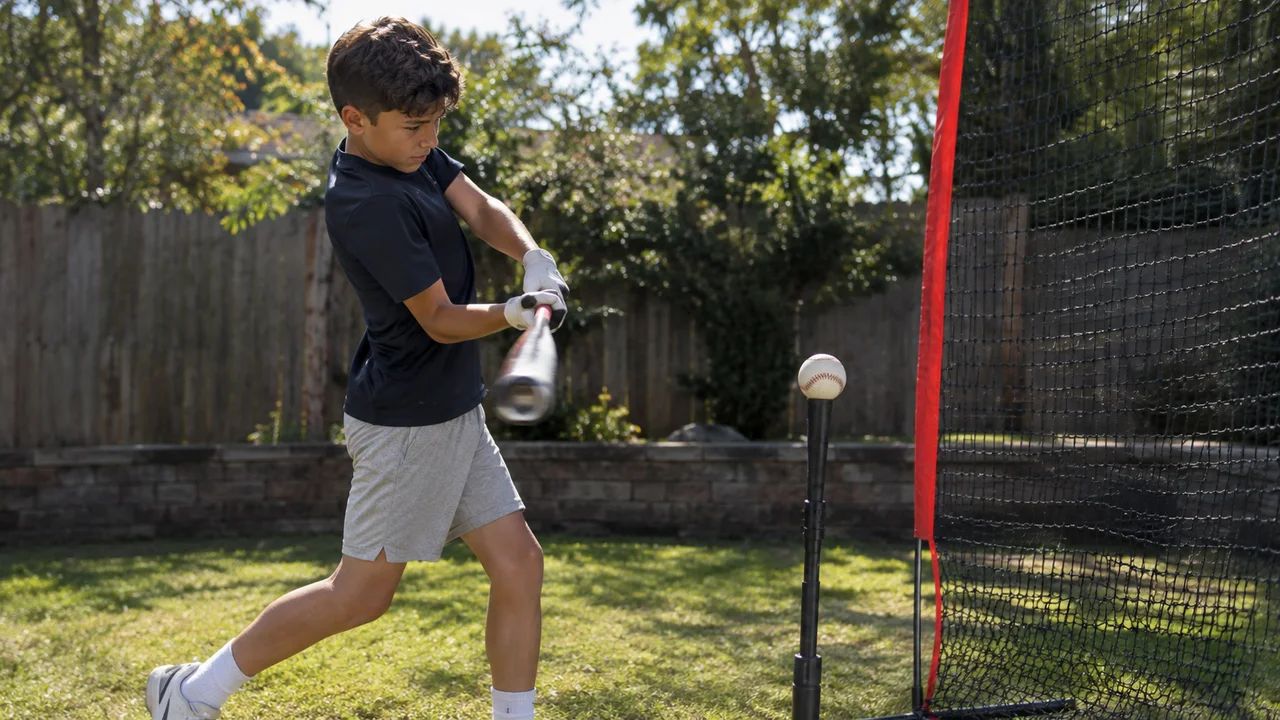
Coaches at every level use the tee because it removes timing from the equation. With the ball sitting still, a hitter can focus entirely on how they move. That makes it the best tool for building a swing and the most honest one for spotting problems.
1. Basic Tee Work
Set the tee at belt height, even with the front of the plate. Take a normal stance and hit line drives into the center of the net. The goal is not power. It is the same solid contact, swing after swing. Ten good swings with a short pause between each beats fifty rushed ones.
2. High Tee and Low Tee
Raise the tee to the top of the strike zone and hit five, then drop it to the knees and hit five. Many young hitters drop their back shoulder on high pitches or collapse on low ones. Moving the tee exposes it quickly and teaches the body to adjust.
3. Inside and Outside Tee
Move the tee toward the inside corner and farther forward, since inside pitches are met out in front. Then move it to the outside corner and slightly back. The idea is to let the ball travel on outside pitches and hit it to the opposite field, instead of reaching and rolling over.
Isolation Drills
These break the swing into parts. They are especially useful when a coach has identified one specific problem.
4. Top-Hand and Bottom-Hand Swings
Using a lighter or shorter bat, choke up and swing off the tee with only the bottom hand, then only the top hand. The bottom hand teaches leading the knob of the bat to the ball. The top hand teaches finishing through contact. Keep these to a handful of reps each, and stop if your child's wrist or forearm gets sore.
5. Stride and Stop
Have the hitter take their normal stride and stop, holding the position. Check that their weight is still mostly back, their hands have not drifted forward, and their front foot landed closed rather than wide open. This is where many timing problems start. Repeat it without a ball until the landing position is consistent, then add the swing.
6. Dry Swings With a Checkpoint
No ball at all. Stand in front of a mirror or a window reflection and take slow swings focused on one thing, such as keeping the head still or the back elbow staying down until the hips turn. Dry swings are underrated because they are easy to do in two minutes and put all the attention on the movement.
Add Movement: Toss Drills
Once contact off the tee is consistent, a moving ball starts building timing. These drills need a second person, usually a parent or sibling.
7. Front Toss
The tosser kneels or sits behind a protective screen about fifteen to twenty feet in front of the hitter and tosses underhand into the strike zone. This is the closest thing to live pitching you can safely do at home, because the ball is coming from the same direction as a real pitch. The screen is not optional. Balls come back hard.
8. Side Toss Into a Net
The tosser kneels off to the side, slightly in front of the hitter and well out of the swing path, and tosses the ball into the hitting zone while the hitter drives it into a net. It is quick and generates a lot of reps. Two cautions: the tosser must stay safely out of the way, and because the ball comes from the side, it does not build timing against a pitcher the way front toss does.
9. Colored Ball Recognition
Mark a few plastic balls with a colored dot. The tosser mixes them in, and the hitter only swings at the marked ones. It trains a hitter to see the ball and decide, rather than swinging at everything. Younger players find it more fun than it has any right to be.
How to Structure a Home Session
A focused fifteen or twenty minutes is plenty for most young hitters. Something like this works well:
- Warm-up (3 minutes). Arm circles, a few easy dry swings, and some light tee work.
- Main focus (8 to 10 minutes). The one or two drills tied to what your child is working on, often something a coach assigned.
- Game-like reps (5 minutes). Front toss or varied tee locations, with every swing done at full intent.
- Finish (1 to 2 minutes). A few of their best swings to end on a good note.
Three or four short sessions a week will do more for a swing than one long session on a Saturday, because the body learns a movement through frequent repetition.
Common Mistakes Parents Should Watch For
- Swinging too hard. Kids love to crush the ball. Swinging out of control usually means pulling the head and front shoulder off the ball. Quality contact comes first.
- Stepping in the bucket. The front foot pulls away from the plate toward third base for a right-handed hitter. Often it is a sign of fear or of trying to pull everything.
- Dropping the hands. The hands dip before the swing starts, creating an uppercut that leads to pop-ups and swings under the ball.
- Too many swings, too little attention. Fifty mindless swings reinforce whatever the swing already does, good or bad.
Where Private Hitting Lessons Fit In
Home drills are how a swing gets repeated. They are not a great way to diagnose what is wrong with it. Most parents can see that their child keeps popping up or rolling over, but not the cause, which might be in the load, the stride, the hands, or the hips. Repeating the wrong fix at home can make the problem worse.
That is where a hitting instructor earns their rate. A good one watches a lot of swings before changing anything, often films them, identifies the one or two things that matter most, and then gives your child exactly which drills from a list like this one to repeat at home. The combination, a lesson every week or two with short focused practice in between, is how most young hitters make real progress.
If you are looking for help, you can compare private baseball and hitting coaches in New Jersey on Rite Coach, see what each specializes in and the ages they train, and contact them directly. For more on the lessons themselves, read whether private baseball lessons are worth it compared with team practice. Coaches are listed by town, so it is worth checking your own area: Middlesex County, Camden County, Burlington County, Somerset County and Cumberland County.
Frequently Asked Questions
What is the single best hitting drill for kids?
Basic tee work at different heights and locations. It builds consistent contact and makes swing problems easy to see.
How many swings should a kid take in a home session?
Quality matters more than quantity. For most young players, forty to seventy focused swings in a short session is plenty.
Is soft toss safe to do at home?
It can be, if the tosser stays well out of the swing path and a net catches the ball. Front toss should always be done from behind a protective screen.
Looking for a private baseball coach?
Rite Coach lists coaches across New Jersey.