Basketball Drills for Kids: 12 At-Home Drills by Age
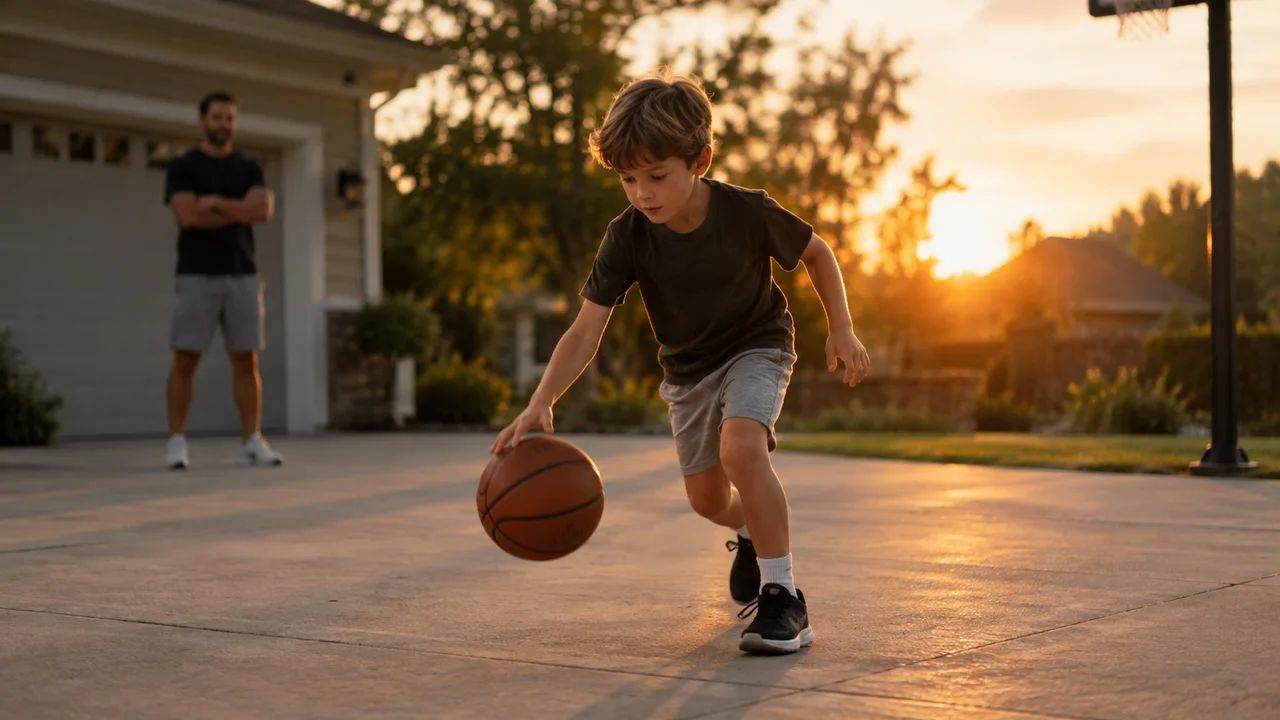
Most kids who get better at basketball do it away from the team. A typical youth practice gives each player a few minutes with the ball in their hands, and the rest is lines, instructions, and waiting. The players who pull ahead are usually the ones who spend fifteen or twenty minutes in the driveway on the days in between.
The good news for parents is that most of the skills that matter at the youth level need almost nothing: a ball, a hoop, and a flat surface. You mostly need to know which drills fit your child's age and how to keep practice short enough that they want to come back tomorrow.
Below are twelve ball handling, passing, and footwork drills, grouped by age, plus the details that make home practice actually work. Shooting gets its own guide, linked at the end, because it deserves more room than a list allows.
Before You Start: Ball Size and Hoop Height
Two things quietly wreck home practice for young kids: a ball that is too big and a hoop that is too high. A child who has to heave the ball with two hands from their chest to reach a ten-foot rim is not learning to shoot. They are learning a bad habit they will spend years undoing.
- Ball size. Match the ball your child's league uses. As a rough guide, a size 5 suits players around nine to eleven, a size 6 is standard for girls from about twelve and boys around twelve to fourteen, and a size 7 is the full-size ball for older boys.
- Hoop height. If you have an adjustable hoop, lower it for young players. Many youth programs use eight or nine feet for younger age groups. If your child can shoot with good form at eight feet, raise it gradually.
Ages 5 to 7: Make Friends With the Ball
At this age the goal is comfort. Kids should be touching the ball as much as possible and having fun doing it. Forget plays and positions. Keep sessions to ten or fifteen minutes and stop while they are still enjoying it.
1. Ball Slaps and Taps
Have your child slap the ball hard between their hands, then tap it back and forth between their fingertips as fast as they can for twenty seconds. It builds the fingertip control dribbling depends on.
2. Stationary Dribble Count
Standing still, dribble with the right hand and count out loud. Then the left. Challenge them to beat their own record without losing the ball. Encourage fingertip pushes rather than palm slaps, and eyes up.
3. Red Light, Green Light Dribbling
The classic game with a ball. On green, dribble forward. On red, stop and hold the dribble without losing control. It teaches changing speed and stopping on balance, and young kids will play it far longer than they will do a drill.
4. Wall Passing
Find a sturdy wall (a garage door works if you do not mind the noise) and have your child stand a few steps back. Chest pass to the wall, catch the rebound with two hands and fingers spread, and repeat. Count catches in a row. It builds hand strength and teaches them to catch the ball with their hands instead of trapping it against their chest.
Ages 8 to 10: Build Both Hands
This is where the weak hand becomes the priority. Most players this age can dribble with their strong hand and avoid the other one completely, which defenders learn to exploit quickly. Sessions can run fifteen to twenty minutes.
5. Two-Minute Weak-Hand Challenge
Dribble only with the weak hand for two minutes: high dribbles, low dribbles, walking forward and backward. If the ball gets away, pick it up and keep going. Doing this most days for a few weeks produces a visible change.
6. Crossover Pound
Dribble hard with one hand three times, then cross the ball low to the other hand, and repeat. Keep the crossover below the knees. Once it is smooth, add a step to the side with each cross, so the move starts to feel like something they would use in a game.
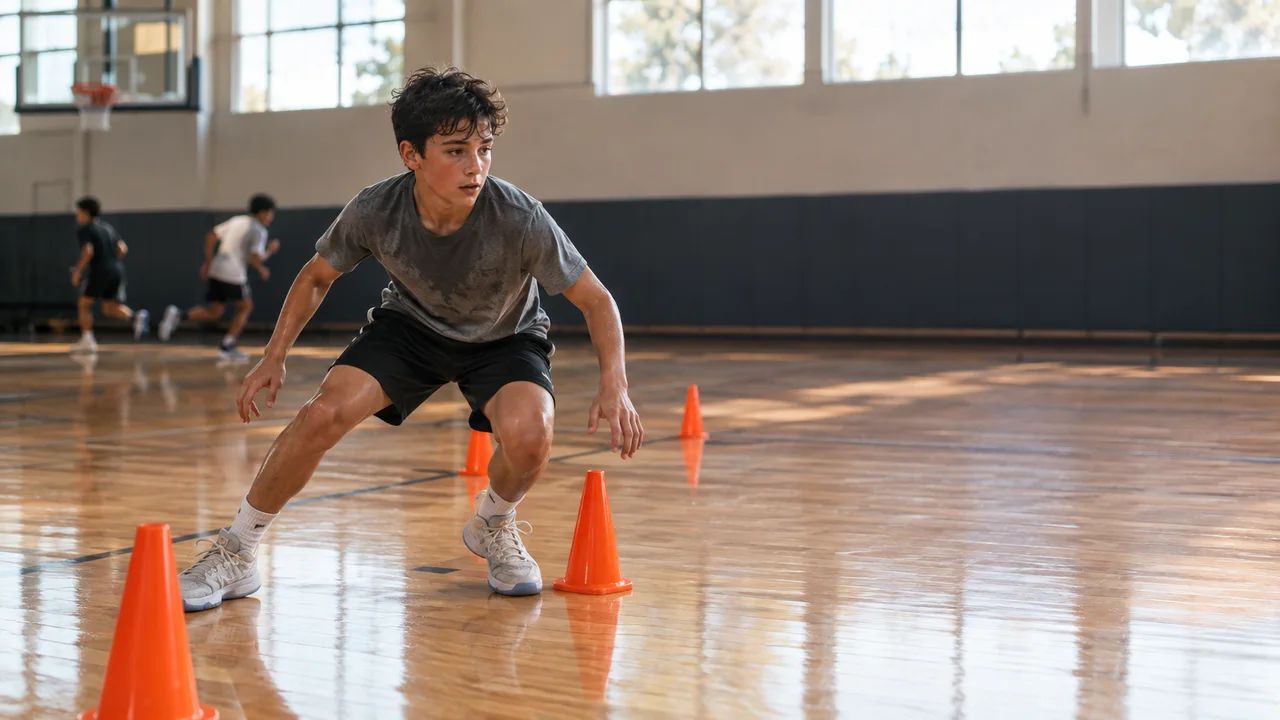
7. Cone Weave
Set five cones, shoes, or water bottles in a line about four feet apart. Dribble through them in a zigzag, switching hands at each cone so the ball is always on the side away from the cone. Walk it first, then speed up. The cones stand in for defenders, and the habit of protecting the ball with the body carries straight into games.
8. Layup Lines, Both Sides
Practice layups from the right side off the left foot and from the left side off the right foot. The left-side layup with the left hand will feel awkward. That is exactly why it needs the reps. Five makes from each side, then switch.
Ages 11 to 13: Game Speed
By middle school, players need to do things quickly and under a bit of pressure. The drills get harder, but the idea is the same: fewer, better reps done with intent. Twenty to thirty minutes is plenty.
9. Two-Ball Dribbling
Dribble two balls at the same time, first together, then alternating. It is humbling for a week, then improves fast, because the weak hand cannot hide.
10. Jump Stop and Pivot
Dribble hard toward a spot, land a two-footed jump stop with knees bent and the ball protected, then pivot on one foot away from an imaginary defender and pass to a target. Repeat, pivoting forward and backward on each foot. Traveling calls at this age almost always come from sloppy stops, and a player who stops on balance can pass, drive, or shoot from the same position.
11. Mikan Drill
Standing under the basket, make a right-handed layup off the backboard, catch it without letting it hit the ground, step across, and make a left-handed layup. Keep going back and forth. Aim for ten makes in a row, then time it. It builds touch around the rim with both hands.
Ages 14 and Up: Make It Competitive
High school players generally know the drills. What they need is structure and a reason to push. Timed and scored workouts do both.
12. Timed Full-Court Ball Handling
On a court or a long driveway, dribble the length and back using a set sequence: crossover at the first mark, between the legs at the second, behind the back at the third, then a hard change of pace to finish. Time it and record the number, with a rule that any lost ball adds five seconds. Repeat the same course each week. A written time gives a teenager something concrete to beat, and it tells you both whether the work is paying off.
How to Make Home Practice Stick
The drills are the easy part. Getting a child to do them regularly is harder. A few things help.
- Short and frequent beats long and rare. Fifteen minutes five days a week will do more than one ninety-minute session on Sunday.
- Let them keep score. Kids respond to beating their own records far more than to being told to practice.
- Do not coach every rep. Pick one thing to praise and, at most, one thing to fix. A running commentary turns practice into a chore.
- End on a make. Finishing on a success brings them back the next day.
When a Coach Helps
What About Shooting?
Shooting is the skill kids most want to practice and the one most easily practiced wrong. The short version: keep young players close to the basket until their form is consistent, and use a lowered hoop and the right ball size. For the full progression, from form shooting at the rim to game-speed work, see our guide to basketball shooting drills that transfer to games.
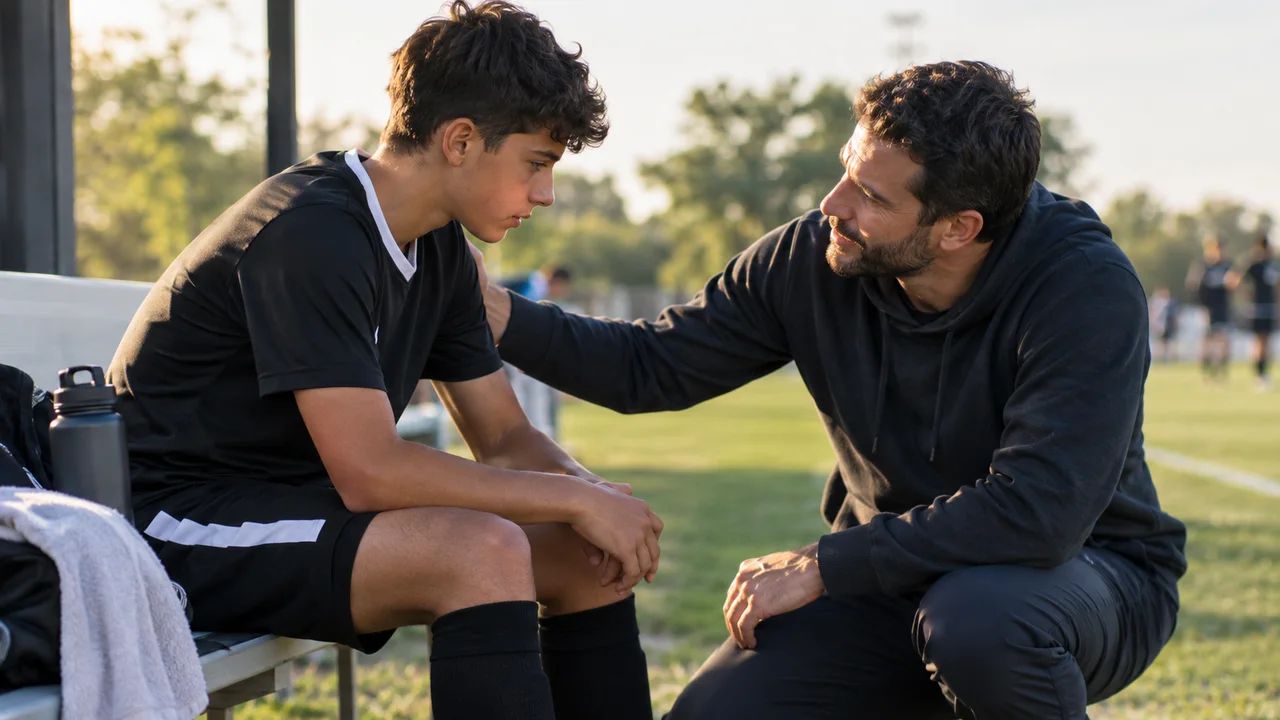
Home drills build habits, but they also repeat whatever mistakes a player already has. If your child dribbles with their palm, crosses the ball too high, or travels every time they stop, more reps at home can lock the problem in. That is where a few sessions with a private coach tend to pay off. A good trainer spots the mechanical issue, fixes it at close range, and then gives your child the specific drills to practice at home so the change holds.
Many families use private coaching exactly this way: a session every week or two, with the driveway doing the rest. If that sounds useful, you can compare private basketball coaches in New Jersey on Rite Coach by experience, the age groups they train, and their rates, then contact them directly. There is no booking fee.
Frequently Asked Questions
How long should a kid practice basketball at home each day?
For younger children, ten to fifteen minutes is plenty. Players around ten to thirteen can handle fifteen to thirty minutes. Consistency matters much more than length.
Can my child practice basketball without a hoop?
Yes. Every ball handling, passing, and footwork drill in this guide works on any flat surface, and those skills make up most of what young players need to improve.
Looking for a private basketball coach?
Rite Coach lists coaches across New Jersey.