Youth Football Tackling Drills: Safe Progressions That Work
Tackling is the part of youth football that worries parents most and the part most often coached badly. The good news is that the technique that keeps players safest is also the technique that produces the most reliable tackles, so there is no trade off to manage.
The principle throughout: the head is never the contact point and never crosses the ball carrier's body. Everything below builds toward that.
Stage 1: No Contact, No Pads
Every player should be able to do these before touching another player.
Hit position hold. Feet shoulder width, knees bent, back flat, eyes up, hands inside. Hold five seconds. This is the position everything else happens from, and most young players cannot hold it yet.
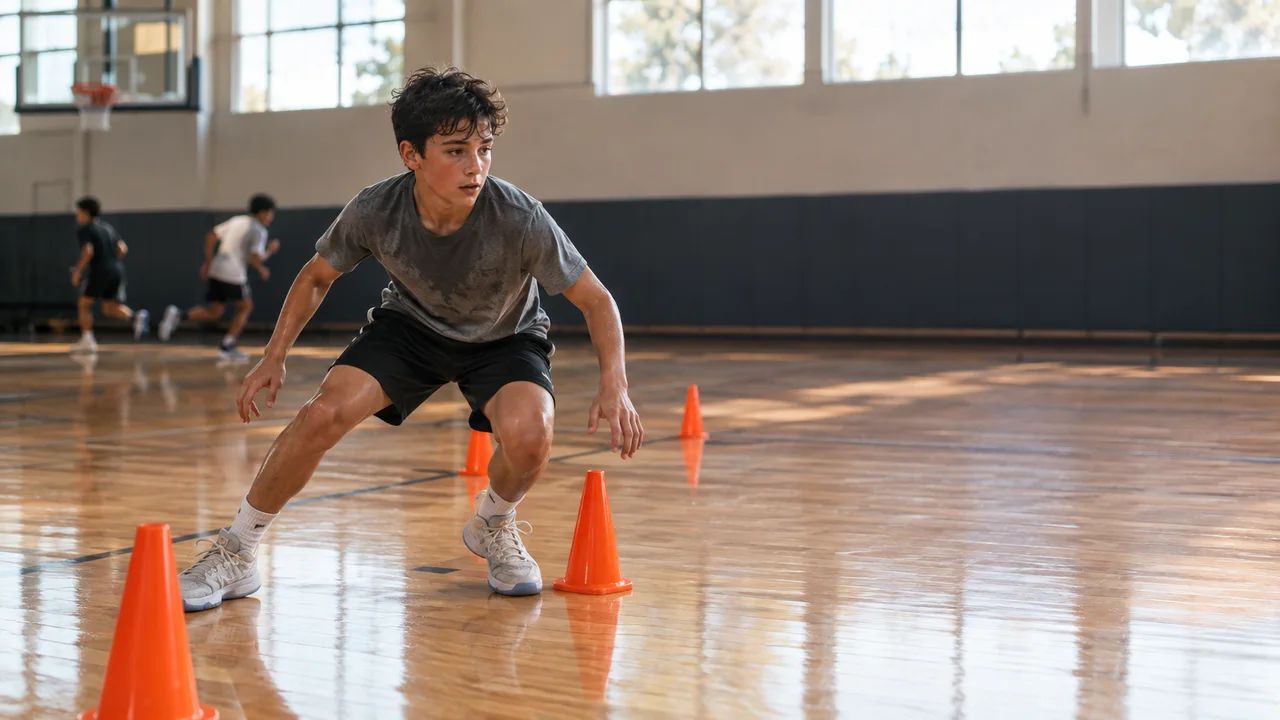
Mirror shuffle. Two players facing, one leads laterally, the other mirrors staying square. Builds the footwork to arrive in position rather than lunging.
Near foot near shoulder walkthrough. Walking pace, defender steps to the ball carrier's near foot and places the near shoulder on the thigh, head to the side, arms wrapping. Slow enough to correct every rep.
Fit and freeze. Defender walks into the fit position against a standing partner and holds it while the coach checks head position, hand placement and hips. Ten seconds, then reset. Boring and enormously effective.
These are worth genuine practice time. A large share of youth football drills without pads have more transfer than the padded version, because players can think about what they are doing.
Stage 2: Angle and Approach
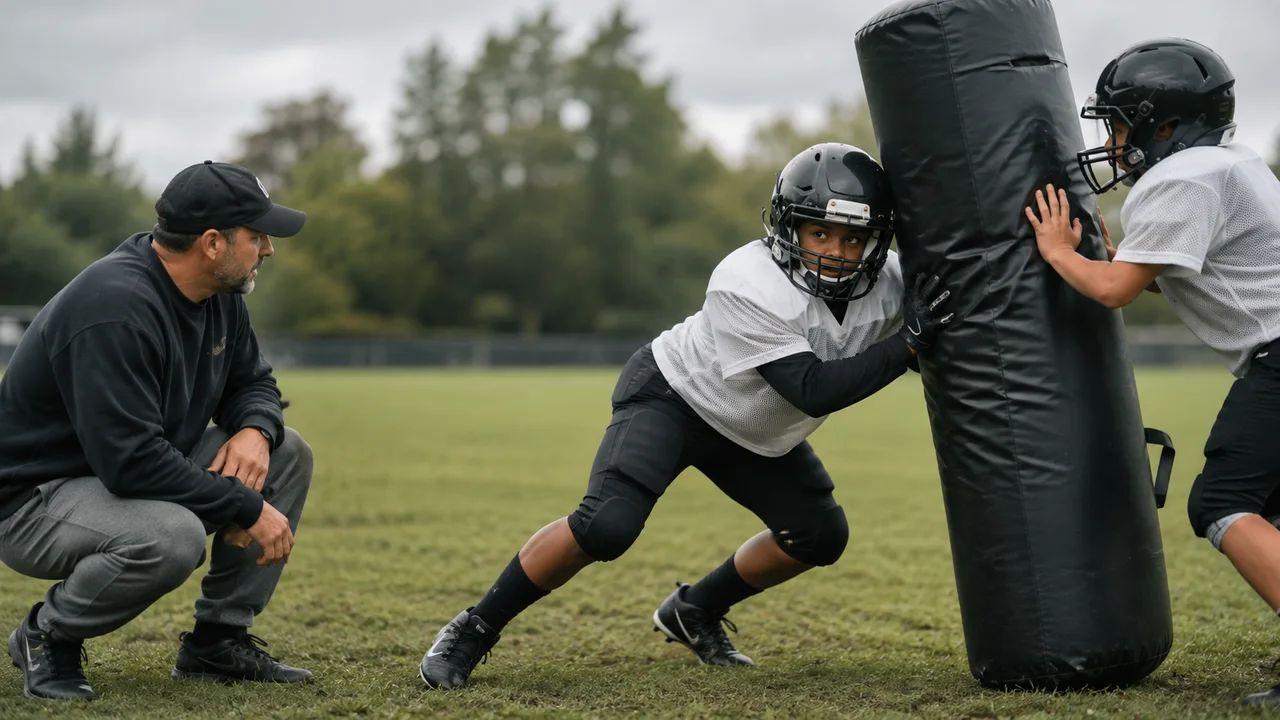
Angle tackle to a bag. Defender approaches a standing bag at forty five degrees, breaks down two steps out, contacts with the near shoulder, drives through. The break down step is the coaching point, and the one most often skipped.
Sideline leverage drill. Ball carrier runs a narrow lane, defender uses the sideline as an extra defender rather than trying to make a highlight tackle. Teaches leverage and angles, which prevent more yards than raw aggression does.
Tracking drill. Defender simply runs behind a ball carrier who is changing direction, staying in position without tackling. Pure pursuit, no contact, and it fixes the most common missed tackle cause, which is a bad path.
Two step break down. Defender sprints five yards, then must take two short choppy steps before touching a bag. Isolates the deceleration that makes every other part possible.
Stage 3: Controlled Live
Only once stages one and two look correct at speed.
Thud tempo one v one. Full approach, contact, wrap, but the ball carrier stays on their feet. Most of the learning happens here and it should be the bulk of your live reps.
Short space one v one. Five yard box, ball carrier tries to get past. Short distances keep speeds manageable while forcing real decisions.
Team pursuit. Whole defense pursues a ball carrier at controlled speed, everyone finishing at the correct angle. Builds the habit that eleven defenders converge, which is what actually stops offenses at youth level.
Two man tackle. One defender arrives first and stops the legs, a second wraps the ball. Teaches gang tackling as a technique rather than an accident.
Coaching Points That Matter Most
Eyes up, always. If a player's chin drops, stop the rep. No exceptions.
Break down before contact. Two short steps beat one long lunge every time.
Near foot, near shoulder. Gives the defender leverage and keeps the head out of the collision.
Wrap and drive. A tackle is not complete on contact. Feet keep moving.
Reps and Volume
Youth practices should be light on live contact and heavy on the first two stages. Many leagues now cap contact minutes per week, and that constraint is a feature, not an obstacle. Teams that spend their time on approach, footwork and angles tackle better than teams that spend it on collisions.
A practical split for a ninety minute practice: fifteen minutes of stage one work, twenty of stage two, and no more than ten of controlled live. The rest goes to position work and team periods.
What to Tell Parents
Parents who are nervous about tackling usually relax once they understand the progression. Three things worth saying at your first parent meeting: contact is capped and tracked, the technique taught keeps the head out of collisions by design, and most of the tackling work happens without pads at all.
Where a Private Coach Fits
Tackling is best coached in a team setting with proper progressions, so it is not usually what private football sessions cover. What private sessions do well is the position specific work that team practice never has time for: a lineman's hand placement, a receiver's release, a quarterback's footwork.
If you are looking for position specific coaching, you can browse private football coaches by experience and parent reviews, or go straight to football coaches in New Jersey. Coaches are listed by town, so it is worth checking your own area: Hudson County, Essex County, Somerset County, Sussex County and Burlington County.
Looking for a private football coach?
Rite Coach lists coaches across New Jersey.