Youth Wrestling: A Parent's Guide to Getting Started
Wrestling tends to worry parents before their child ever steps on a mat. It looks rough, the weight classes sound intense, and most parents who did not wrestle themselves have no idea what a season involves. Then, often within a few weeks, the same parents are the loudest people in the gym.
This guide is for the parent at the beginning. It covers what youth wrestling actually is, what age kids start, what the first season looks like, what it costs in time and gear, how weight classes work, and the honest answer to whether wrestling is good for kids.
What Youth Wrestling Actually Is
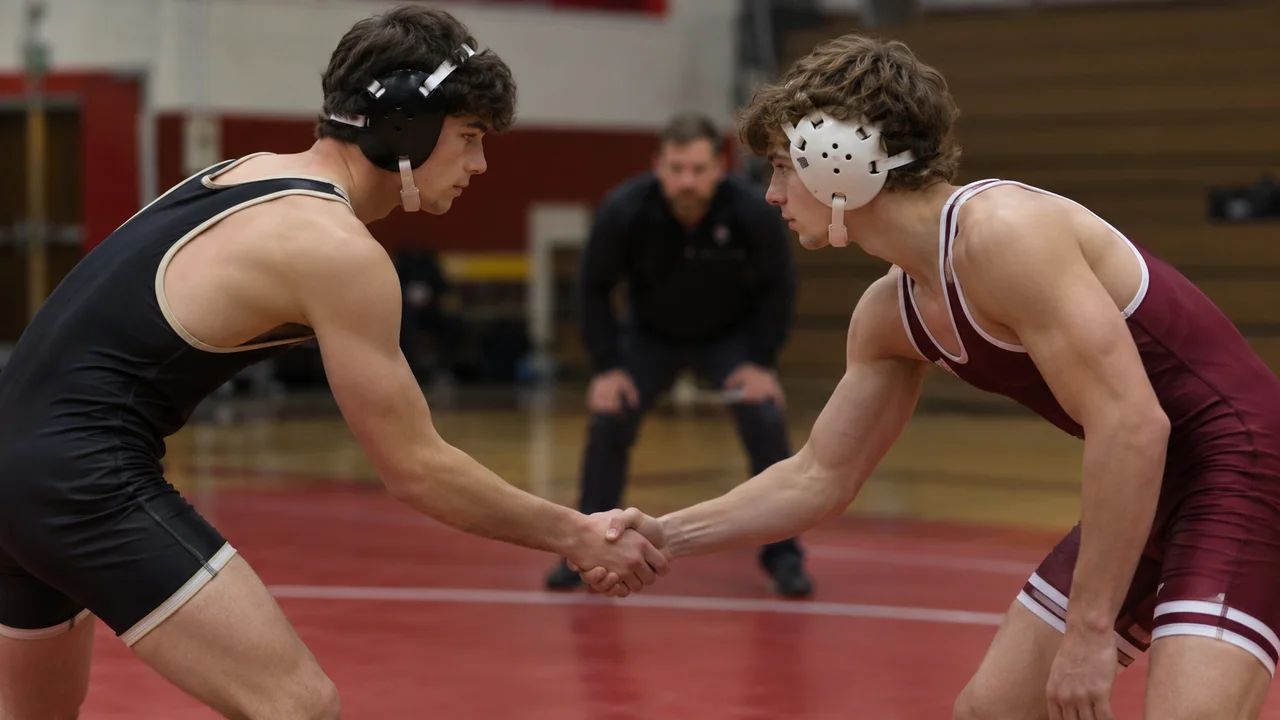
Wrestling is a one-on-one sport where each athlete tries to control the other: taking them down from standing, holding them on their back, or escaping when they are on the bottom. Matches are short, typically a few periods of one to two minutes at the youth level, and scored for takedowns, escapes, reversals, and near falls. A pin, holding both shoulders to the mat, ends the match.
There are three styles you will hear about:
- Folkstyle is what American schools and colleges wrestle. It rewards control, riding on top, and escaping from the bottom. Most kids start here.
- Freestyle is an Olympic style, scored differently, with more emphasis on explosive takedowns and exposing an opponent's back. Many wrestlers compete in it during spring and summer.
- Greco-Roman is the other Olympic style, where attacks below the waist are not allowed. Fewer youth wrestlers specialize in it.
Youth wrestling is also something of a paradox. It is an individual sport, since nobody can win your match for you, but it is practiced and scored as a team, and the team culture is often what keeps kids in it.
What Age Do Kids Start?
Many youth programs welcome children as young as five or six. At that age practice looks more like organized play than wrestling: tumbling, balance games, simple positions, and learning how to fall safely. Competition, if any, is low-key.
There is no penalty for starting later. Plenty of successful high school wrestlers began in middle school, and some started as freshmen. Wrestling rewards athleticism, work ethic, and coachability, which means a motivated twelve-year-old can catch up faster than in sports built on years of ball skills.
Is Wrestling Good for Kids?
For most children, yes, with the same caveat as any sport: the quality of the program matters more than the sport itself. Here is what wrestling tends to do well.
- It builds a whole-body athlete. Balance, strength, flexibility, grip, and conditioning all develop together. That is why football, lacrosse, and baseball coaches often encourage their players to wrestle in winter.
- Size is less of a barrier. Because athletes compete against others their own weight, a small child who would be overmatched in football competes on even terms.
- It teaches ownership. There is no one to blame after a loss and no one to share credit with after a win. Kids learn to handle both.
- It rewards effort directly. Conditioning and hard work show up on the mat quickly, and children see the link between practice and results.
The honest downsides: it is demanding, practices are physically hard, and there is real contact. Some kids love that. Some do not, and that is fine.
Is It Safe?
Wrestling carries injury risk like any contact sport, most commonly sprains, strains, and bumps. Well-run youth programs manage this by teaching safe technique early, matching partners by size and experience, and closely supervising live wrestling. Headgear protects the ears.
Two things deserve specific attention:
- Skin infections. Shared mats can spread conditions like ringworm and impetigo. The prevention is simple and non-negotiable: shower right after practice, wash gear every time, and keep your child off the mat with any unusual rash until it is checked. A good program cleans its mats daily.
- Weight cutting. More on this below, but young wrestlers should not be dieting to make a weight class.
Weight Classes, Explained Without the Scary Parts
Wrestlers compete in weight classes so they face opponents of a similar size. At youth tournaments, athletes typically weigh in and are grouped with others close to their weight.
Parents often hear stories about wrestlers skipping meals or sweating off pounds before a match. At the youth level that is unnecessary and unhealthy, and a responsible coach will not ask for it. Children should wrestle at whatever they naturally weigh while eating normally and staying hydrated. High school programs have formal weight management rules, including body composition and hydration testing, designed to prevent unhealthy cutting.
If a youth coach pushes a young child to lose weight for competition, treat it as a red flag and find a different program.
What the First Season Looks Like
A typical youth folkstyle season runs through the winter, alongside the school season. Expect something like this:
- Practices two to four times a week, usually an hour to ninety minutes, mixing warm-ups, technique, drilling with a partner, and some live wrestling.
- Tournaments on some weekends. A youth tournament can take most of a day, with a few short matches spread across long stretches of waiting. Bring snacks, something to do, and patience.
- A steep early learning curve. Beginners lose a lot at first. That is normal and expected. Watch whether your child is improving and enjoying practice, not their record.
What You Need to Buy
- Wrestling shoes. Light, ankle-supporting shoes with a flat grip sole. Beginner pairs are widely available.
- Headgear. Required for school competition and a good idea for practice.
- A singlet. Only needed for competition. Many clubs provide a team singlet or sell one.
- Practice clothes. Fitted shorts and a t-shirt without zippers or pockets, washed after every practice.
Beyond gear, costs are mainly club or program fees and tournament entry fees, which vary a lot by program. Ask for a full season estimate before you sign up.
How to Choose a Program
Most families start with a town recreation program, a school-affiliated youth program, or a private wrestling club. When you visit, look for:
- Coaches who spend real time teaching technique, not just running live wrestling
- Kids paired thoughtfully by size and experience
- A clean room and clear hygiene rules
- An atmosphere where beginners are welcomed rather than thrown in with experienced kids
- No talk of weight cutting for young children
Most programs allow a free trial practice. Take it, and pay attention to how your child feels afterward.
Where Private Lessons Fit
Private wrestling lessons are not a replacement for a club or team. Kids learn to compete by wrestling lots of different partners, and that only happens in a room. What private lessons add is focused time. A busy practice might give each wrestler a few seconds of correction per technique. In a private session the coach usually wrestles with the athlete directly, feels exactly where a position breaks down, and fixes it on the spot.
Many families add lessons once a child is committed and wants to improve faster, before the season starts, or when they are stuck on the same problem match after match. Some nervous beginners also do a few private sessions first, so their first team practice feels less intimidating.
If you are in New Jersey, one of the strongest wrestling states in the country, you can compare private wrestling coaches in New Jersey on Rite Coach by background, the age groups they train, and their rates, and contact them directly.
Frequently Asked Questions
Can girls wrestle?
Yes. Girls wrestling is one of the fastest-growing parts of the sport, with dedicated girls divisions at many youth tournaments and in high school competition.
My child is small for their age. Is wrestling a good fit?
Often it is an especially good fit, because weight classes mean they compete against kids their own size.
How do I know if my child is ready for tournaments?
When they understand the basic positions, can wrestle live safely in practice, and want to compete. A good coach will tell you, and there is no rush.
Looking for a private wrestling coach?
Rite Coach lists coaches across New Jersey.