Soccer shooting drills for kids
Most young players can kick a ball hard. Far fewer can put it where they want, with either foot, while a defender closes in. That gap is what good soccer shooting drills close, and the fix is rarely more power. It is a better plant foot, a locked ankle, and many more shots than a team practice usually has time for.
This guide covers the technique cues that fix the most common misses, the goal sizes kids actually shoot at, and shooting drills sorted by age, finishing with a game to end practice. For drills across every skill at each stage, start with our main guide to youth soccer drills by age.
How should kids strike the ball?
Five cues cover nearly every shot a young player takes. Teach one at a time, and only add the next once the first looks natural.
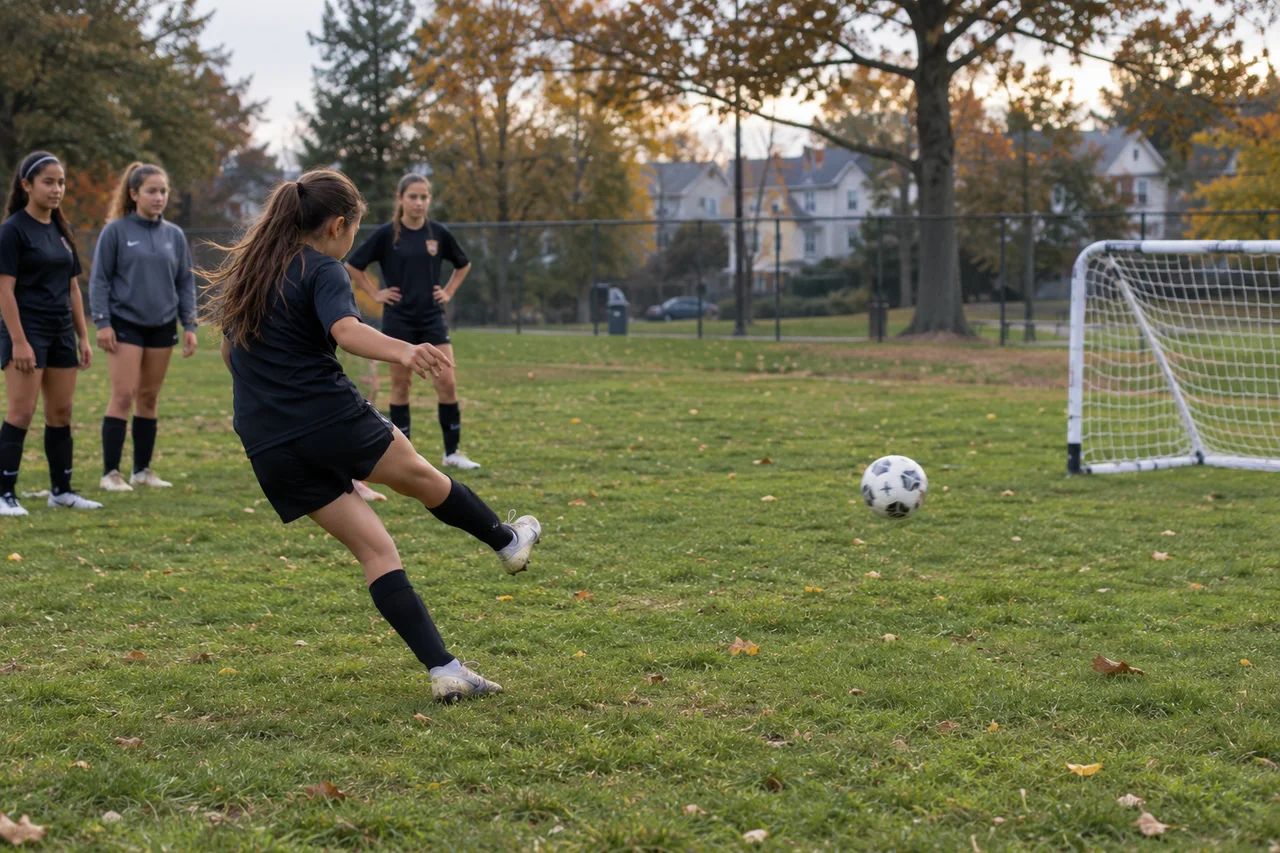
- Plant foot beside the ball, pointing at the target. Where the standing foot points is usually where the ball goes. Too far behind the ball and the shot flies high.
- Head and chest over the ball. Leaning back is the main reason shots sail over the bar.
- Ankle locked, toes down. A floppy ankle sends the ball anywhere. For a laces shot, the toes point at the ground through contact.
- Laces for power, inside of the foot for placement. Close to goal, a side-foot finish into the corner beats a blast at the keeper.
- Land on the shooting foot. Following through and landing on the kicking leg keeps the body moving forward through the ball, which keeps it low.
Practice with both feet from the first session. A one-footed shooter needs an extra touch to set up every shot, and defenders learn that quickly.
What size goal should kids shoot at?
Shooting drills work best at the size of goal a child plays on. U.S. Soccer's small-sided standards set the game format, ball, and maximum goal size by age group (U.S. Soccer Player Development Initiatives):
| Age group | Format | Goalkeeper | Maximum goal size | Ball size |
|---|---|---|---|---|
| U6 to U8 | 4v4 | No | 4 ft high x 6 ft wide | 3 |
| U9 and U10 | 7v7 | Yes | 6.5 ft x 18.5 ft | 4 |
| U11 and U12 | 9v9 | Yes | 7 ft x 21 ft | 4 |
| U13 and up | 11v11 | Yes | Regulation, 8 ft x 24 ft | 5 |
The U.S. Soccer chart stops at U12; from U13, teams play 11v11 on regulation goals. Two details matter for practice. The youngest groups play without goalkeepers, so early shooting is about accuracy into a small goal, not beating a keeper. And the 7v7 and 9v9 sizes are maximums: the same guide recommends a smaller 6.5 by 12 foot goal for 7v7, depending on the players' age and ability. Leagues set their own rules, so check which format your town or club plays before you set up distances.
Shooting drills for ages 5 to 8
At this age, the best shooting drill is the one with the most kicks and the least waiting. Every child has a ball, and nobody stands in a line.
Knock down the cones
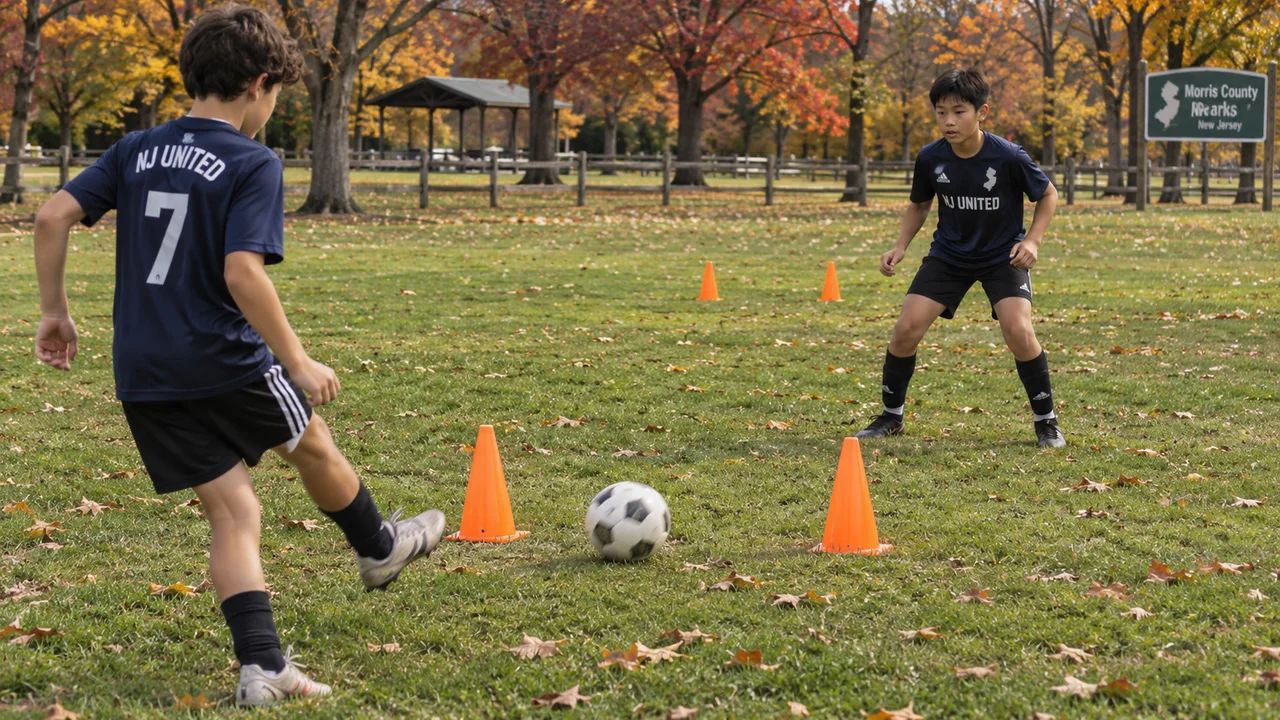
Stand tall cones or empty bottles on a line about 8 to 10 yards away. Players shoot from behind a mark and score a point for every cone they knock over. It rewards aim over power without anyone having to explain why.
Dribble and shoot to small goals
Put four or more small goals around a grid. Players dribble freely and shoot into any goal, then collect their ball and go again. Count goals in 60 seconds, with at least one from the weaker foot.
Shooting drills for ages 9 to 12
Goalkeepers arrive at U9, so shots now need placement and a quick release. Most chances in games come after a pass, not after a long dribble, so the drills should too.
Pass, receive and shoot
A server passes to a player at the top of the box. The first touch goes out of the feet, to one side, and the second touch is the shot. Alternate the side of the first touch so players shoot with both feet. This is the most useful shooting drill at this age.
Turn and shoot
The player starts with their back to goal. The server passes in, the player turns with an outside or inside hook, and shoots before a passive defender can close. Make the defender active once the turns are clean.
1v1 to goal with a recovering defender
The attacker starts with the ball about 30 yards out, and a defender starts a few yards behind. The attacker has to shoot before the defender catches up. It teaches the habit of shooting early instead of taking one touch too many. The coach then rolls a second ball in for a rebound, because many youth goals come from second chances.
If you add crosses at this age, keep the finishes on the ground or volleyed. U.S. Soccer's standards do not allow heading in 4v4 or 7v7 games, or in 9v9 games at U11 (U.S. Soccer Player Development Initiatives).
Shooting drills for ages 13 and up
Teenagers on full-size fields need to shoot faster, from harder angles, and with defenders close.
- Finishing against the clock. Line up six balls at the top of the box. The player has 30 seconds to receive and shoot all six from a server. It trains a quick setup and composure while tired.
- First-time cutbacks. A wide player drives to the end line and cuts the ball back to a runner arriving at the penalty spot, who finishes first time with the inside of the foot. Our drills by age guide covers position-specific finishing in more detail.
- Weak-foot only rounds. Run any drill above with the strong foot banned. It is uncomfortable, and the improvement is fast.
A finishing game to end practice
The knockout game, often called World Cup, is the best way to finish a session. Players play in pairs with one goal and a keeper. When a pair scores, they are through to the next round. The last pair left without a goal is out, and the game repeats until one pair wins.
Every shot happens under pressure, with defenders, rebounds, and a reason to hurry. Lines at an open goal build technique; games teach when to shoot.
Common shooting mistakes
- Leaning back. The ball goes over the bar. Fix it with the "chest over the ball" cue and landing on the shooting foot.
- Toe poking. Quick, but almost impossible to aim. Toes down and contact with the laces.
- Looking up at the goal at contact. Look at the goal before the shot, then at the ball as you strike it.
- Blasting at young keepers from close range. Rotate keepers often, and ask for placed, side-foot finishes inside the box. Young keepers who get hit hard every rep stop wanting to play there.
- Only using one foot. Make the weaker foot part of every drill, not an afterthought.
Shooting practice through the New Jersey year
New Jersey's soccer calendar gives shooting practice a natural rhythm. Town recreation leagues and many clubs play in the fall, and high school soccer is a fall sport too: the NJSIAA state finals for 2026 are scheduled for November 21 and 22 (NJSIAA soccer tournament regulations). During the season, keep shooting work short and sharp, two or three of the drills above at the end of a session.
Winter is when finishing technique can be rebuilt. Many New Jersey clubs and indoor facilities run futsal and indoor sessions over the winter. The smaller court means more shots per minute, and the low-bounce futsal ball rewards clean contact over power. For habits to build at home alongside it, see how to get better at soccer.
If your child works with a private coach, ask one question at the first session: "What is your shooting warm-up?" A good answer starts close to goal with technique and both feet, then builds to game-speed finishing.
You can compare private soccer coaches in New Jersey on Rite Coach by experience and the ages they train, then contact them directly. For what shapes the cost, see our guide to private soccer coach costs in New Jersey.
Frequently asked questions
How can my child shoot harder in soccer?
Power comes from technique, not effort: plant foot beside the ball, ankle locked with toes down, contact with the laces, and a full follow-through that lands on the shooting foot. Most kids who "can't shoot hard" are striking with the toe or leaning back.
Why do my child's shots always go over the goal?
Usually because they lean back or plant the standing foot too far behind the ball. Ask them to keep their chest over the ball and land on their kicking foot after the shot.
How many shots should a young player take in practice?
There is no set number, but more than most team practices allow. Shooting games with a ball for every child, plus a few minutes against a wall or small goal at home, add up quickly.
Looking for a private soccer coach?
Rite Coach lists coaches across New Jersey.