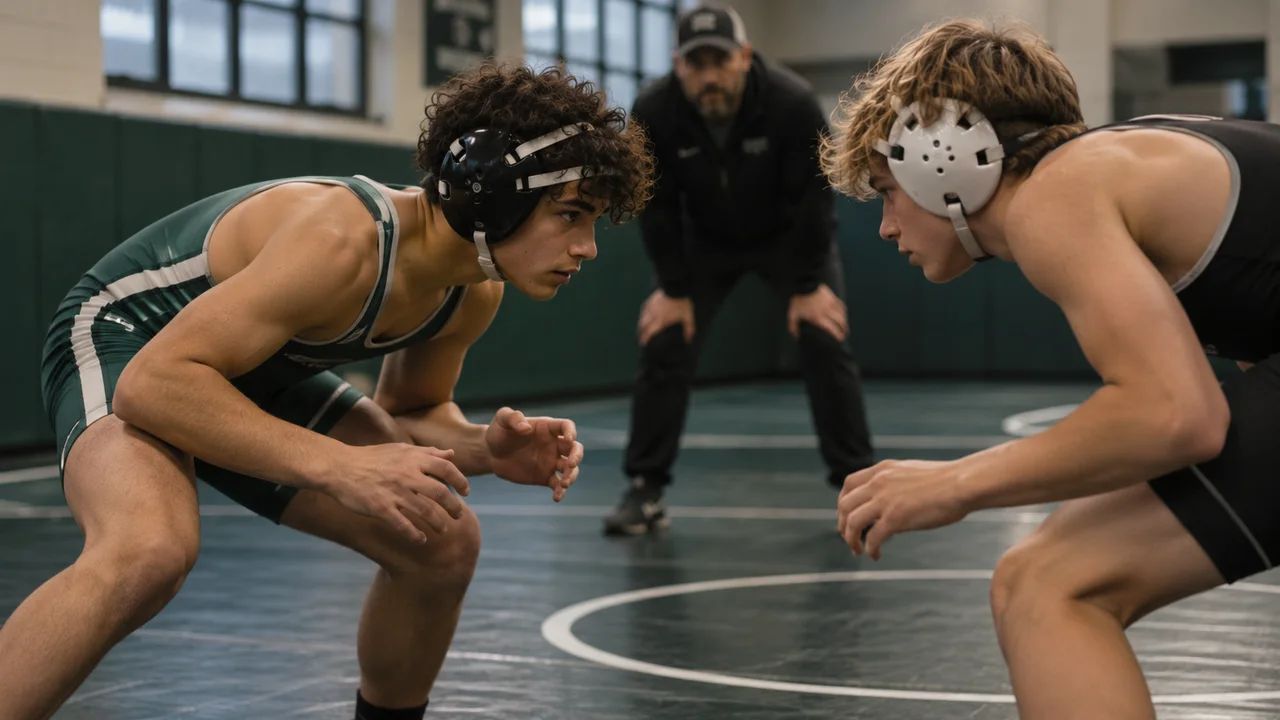
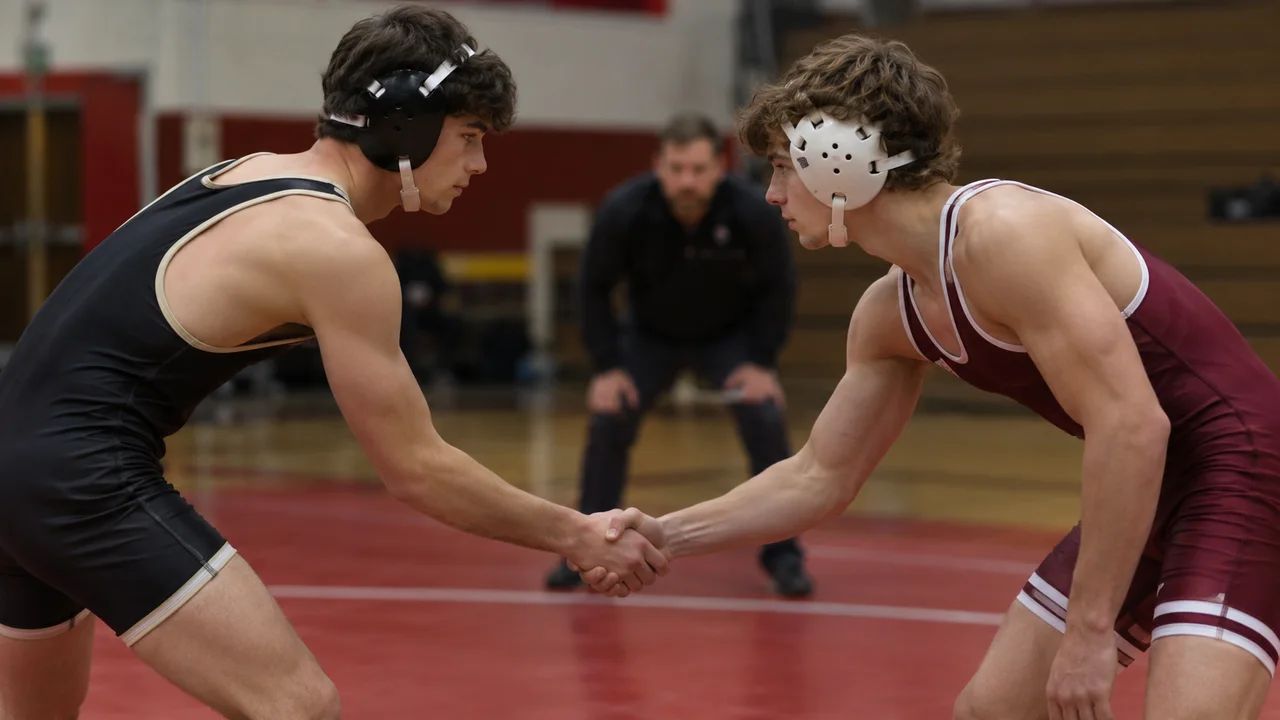
Wrestling weight classes for youth and high school
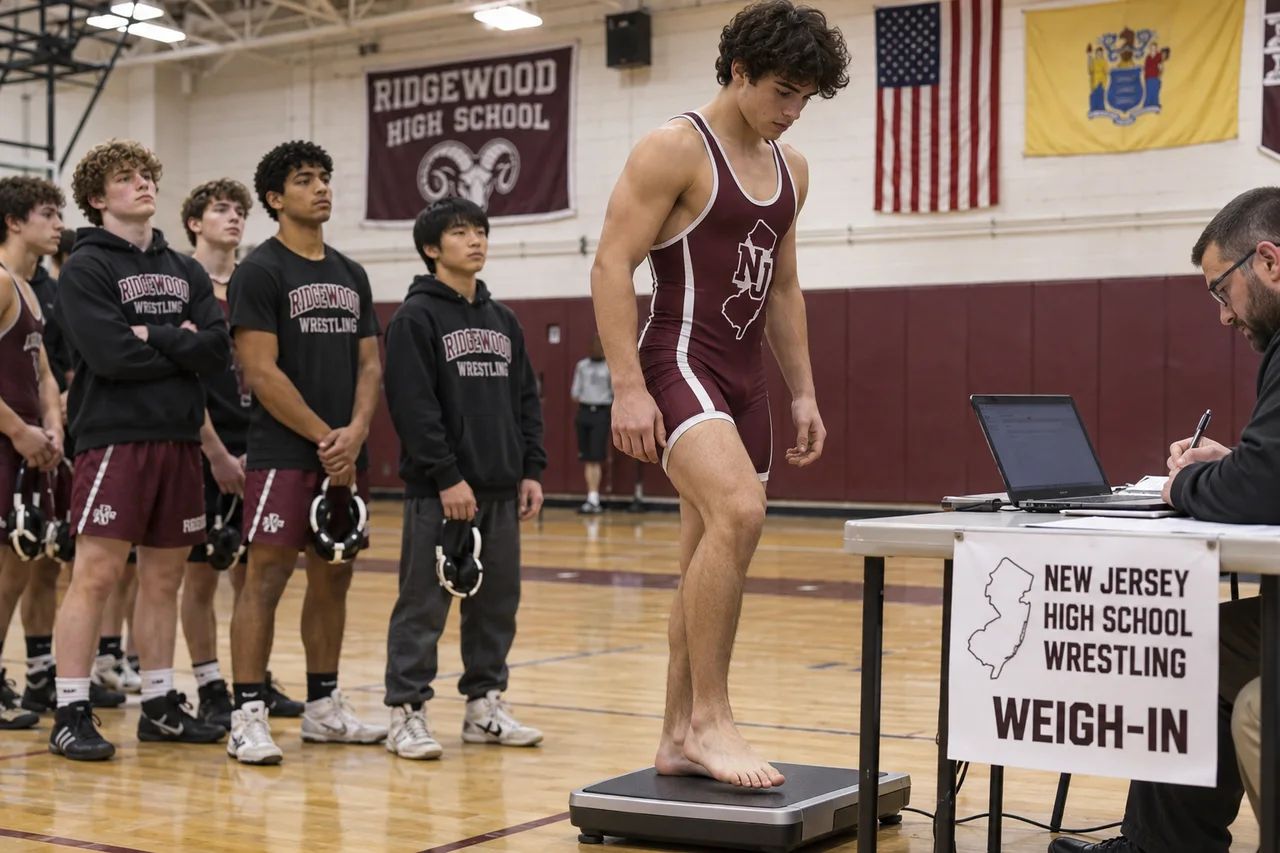
Every high school wrestling season in New Jersey starts with a line of kids outside a bathroom, waiting for a hydration test. Before a wrestler steps on a mat in a varsity match, the state already knows how much they weigh, how hydrated they were when measured, and the lowest weight they are allowed to wrestle that season. Weight classes are the most visible part of the sport, and the rules behind them are stricter than most parents expect.
This guide lists the current NJSIAA weight classes for boys and girls, explains how youth brackets differ, and walks through weigh-ins and minimum weight. For the bigger picture (gear, costs, season timing and what a first season looks like), start with our youth wrestling parent's guide.
How do wrestling weight classes work?
A weight class is a range with a ceiling. A wrestler in the 126-pound class weighs more than 120 pounds and no more than 126 at the weigh-in. Wrestlers only face opponents in the same class, which keeps matches fair and keeps a small freshman from being thrown around by someone 40 pounds heavier.
The weigh-in happens before each competition, on a certified scale. A wrestler who comes in over the limit cannot wrestle in that class that day. In high school, a wrestler may also move up one class above their actual weight, which is how coaches fill a lineup when one weight is thin.
High school weight classes in New Jersey
New Jersey follows the national federation (NFHS) structure: 14 classes for boys and 12 for girls. The boys classes below are from the NJSIAA boys wrestling regular season rules for 2026 to 2027.
| Boys class (lbs) | Boys class (lbs) |
|---|---|
| 106 | 157 |
| 113 | 165 |
| 120 | 175 |
| 126 | 190 |
| 132 | 215 |
| 138 | 285 |
| 144 | |
| 150 |
The girls classes are listed in the NJSIAA girls wrestling regular season rules and match the 12-class NFHS framework for girls.
| Girls class (lbs) | Girls class (lbs) |
|---|---|
| 100 | 138 |
| 107 | 145 |
| 114 | 152 |
| 120 | 165 |
| 126 | 185 |
| 132 | 235 |
Two things to notice. The lightest boys class is 106 and the heaviest is 285, so a high school heavyweight can weigh well over twice as much as the lightest wrestler on the same team. And the girls classes are not the boys classes with a few removed; they start lower and spread wider at the top.
Girls compete in a separate NJSIAA season. Since 2025 to 2026, a girl can be entered in the boys season or the girls season in the state's Trackwrestling system, not both, and a girl entered in the boys season is not eligible for girls events, including the state tournaments (NJSIAA weight certification instructions).
How do youth weight classes differ?
Youth wrestling sorts kids by age first and weight second. USA Wrestling uses age divisions named 8U, 10U, 12U, 14U and 16U, which replaced the older Bantam, Intermediate, Novice, Schoolboy and Cadet names (USA Wrestling). Each division has its own set of weights, and they change with the age group.
Below the national level, there is no single chart. Local club tournaments in New Jersey often weigh kids in and then group wrestlers of similar weight into small brackets instead of using fixed classes. That is usually better for young kids, because a fixed class can put a small child against one who is several pounds heavier and a year older. Classes and weigh-in rules vary by organizer, so read each event's flyer, and expect weigh-ins the night before or the morning of the event.
What youth wrestling generally does not have is the high school certification program described below. That makes the parent's role more important: nobody is measuring body fat or tracking weekly weight loss for a 10-year-old.
How do weigh-ins and minimum weight work in high school?
Every NJSIAA wrestler goes through weight certification before competing. It sets the lowest class a wrestler can enter that season. For 2026 to 2027, certification began November 2, 2026, according to the NJSIAA wrestling page. The process, from the NJSIAA weight certification instructions:
Hydration test first. A urine sample is checked with a refractometer, and the specific gravity reading cannot exceed 1.025. A wrestler who fails must wait 24 hours to retest. Body fat is not measured on a dehydrated athlete, because dehydration skews the result.
Body fat assessment. A trained assessor measures body composition with a BodyMetrix ultrasound device. Coaches are not allowed to perform the assessment or be present, and a school administrator must be there.
Minimum weight. The minimum body fat standard is 7% for boys. For girls it rises from 12% to 19% starting in 2026 to 2027, in line with an NFHS rule change. The lowest weight a wrestler can certify at is based on that floor.
Descent plan. Results go into Trackwrestling, which builds a weekly plan. Weight loss toward the minimum cannot be faster than 1.5% of body weight per week, and the plan recalculates after every weigh-in. Many other states use the NWCA's Optimal Performance Calculator for the same job; New Jersey runs it through Trackwrestling.
Sign-off. The parent, the head coach and the athletic director all sign the individual minimum weight certificate.
NJSIAA also lists a two-pound growth allowance starting January 1, 2027. Kids grow during a season, and the allowance adds two pounds to each weight class from that date so wrestlers are not pushed to fight their own growth through the second half of the year.
At each meet, the referee (or an on-site health professional) does skin checks before wrestling starts, and a wrestler previously flagged for a skin condition needs a signed NJSIAA skin lesion form from a physician, physician assistant or advanced practice nurse to compete. Wrestlers are limited to four weigh-ins per week.
How should a wrestler pick a weight?
The short answer: at or near the weight they naturally walk around at. This post deliberately does not cover how to cut weight. The American Academy of Pediatrics warns that rapid fluid loss, the classic "cutting weight," can be life threatening, and notes that the NFHS banned rapid weight loss methods in 1998 (HealthyChildren.org, from the AAP). The same page lists the 1.5% per week limit on weight loss.
A few practical points for parents:
Growth wins. A teenager who certifies in November often weighs more by February. Plan for that rather than against it.
Strength beats scale weight. A wrestler who is strong and well fed at their natural weight usually wrestles better than a drained one a class lower.
Talk to the pediatrician. Any planned change in weight, up or down, should go through the child's doctor and the coach together. The preseason sports physical is a good moment to raise it.
Wrestling weight and the New Jersey season
New Jersey runs separate state championships for boys and girls. The state's first girls state tournament was held at Boardwalk Hall in Atlantic City in March 2019, making New Jersey the first state in the Northeast with its own girls championship. For 2026 to 2027, NJSIAA lists the individual championships at Boardwalk Hall from February 25 to 27, 2027.
If your child works with a private coach, ask this at the first session: "What weight should my child wrestle this season, and why?" A good answer talks about natural weight, growth and the lineup, not how many pounds to lose by Saturday. A coach who can explain the certification process clearly is also a coach who takes it seriously.
Weight is only one part of the sport. Once the class is settled, the work is on the mat, starting with a solid wrestling stance. You can compare private wrestling coaches in New Jersey on Rite Coach by experience and the ages they train, then contact them directly.
Frequently asked questions
How many weight classes are there in high school wrestling?
In New Jersey, 14 for boys (106 to 285 pounds) and 12 for girls (100 to 235 pounds), following the NFHS structure.
Can a high school wrestler wrestle up a weight class?
Yes. A wrestler can move up one class above their actual weight at the weigh-in. They cannot go below the class their certified minimum weight and descent plan allow.
Do youth wrestlers have to do weight certification?
Generally no. The hydration and body fat program is a high school requirement. Youth events weigh kids in and group them by age and weight, with rules set by each organizer.
Looking for a private wrestling coach?
Rite Coach lists coaches across New Jersey.