Free youth sports practice plan template
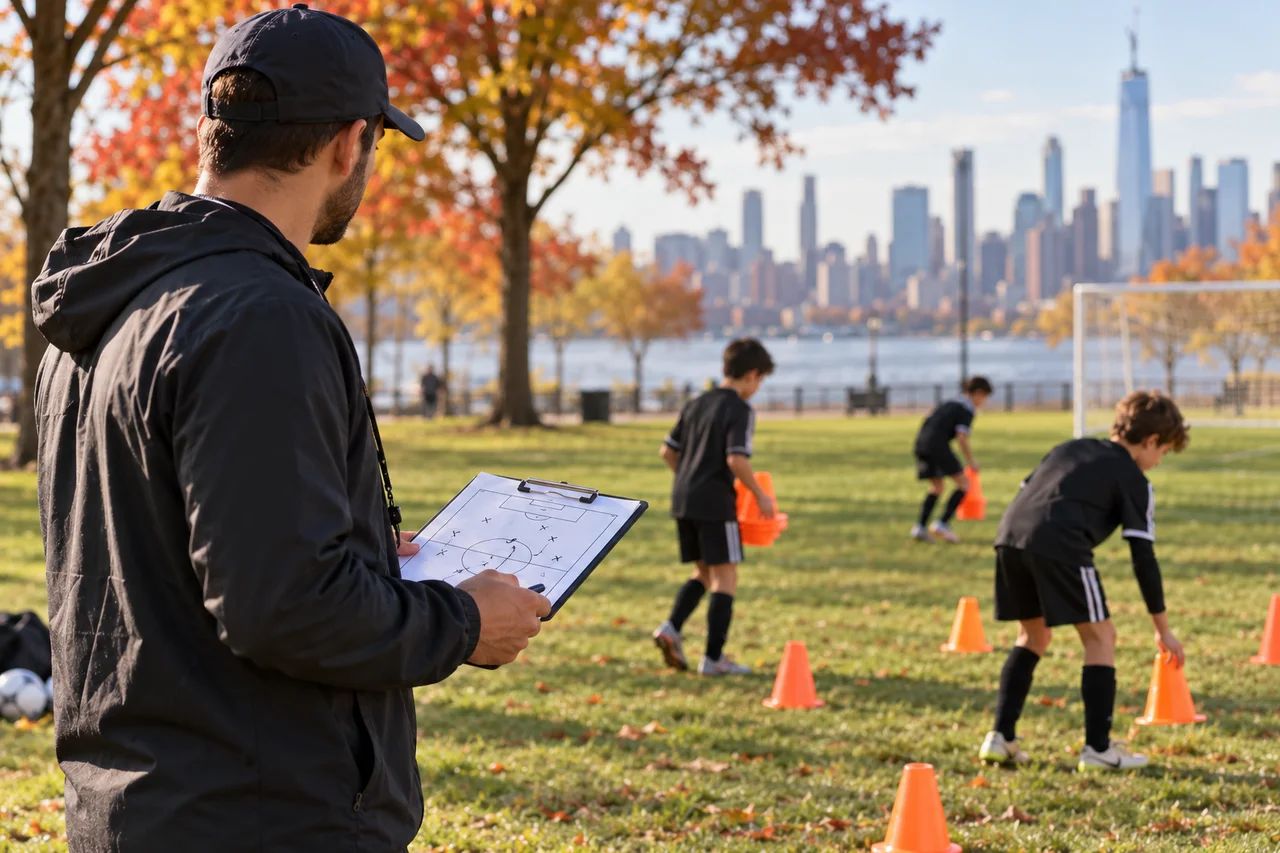
A practice plan template turns "we'll work on passing today" into a session you can run minute by minute. Below is a simple template you can copy, two filled-in sample plans (a 60-minute team practice and a 45-minute private lesson), and age guidance for both.
The template works for any sport. Our sport-specific practice plans build on this one.
What belongs in a youth practice plan?
Every plan needs six fields:
- Date and focus. One line that says what this session is about.
- Time block. Minute marks, not just durations, so you can see at a glance when you are running late.
- Activity. The drill or game.
- Coaching points. Two or three short cues at most. Kids cannot hold five.
- Equipment and setup. Balls, cones, pinnies, space.
- Notes for next time. What worked, what to change, who needs extra reps.
Pick one objective per session and write it as something a player can do by the end. "Receive with the back foot open" is an objective. "First touch" is a topic.
A written plan matters for private coaches as much as team coaches. Parents ask what their child worked on, and "a bit of everything" does not build trust. A plan gives you a clear answer, and clear answers keep families booking (more in our guide to getting private coaching clients).
The practice plan template (copy and use)
Copy this table into a doc or print it. The default block order works for most sports and ages: warm-up, skill block, game-like block, live play, then a short recap.
| Time | Activity | Coaching points | Equipment and setup |
|---|---|---|---|
| 0 to ___ | Dynamic warm-up: ___ | 1. ___ 2. ___ | ___ |
| ___ to ___ | Skill block: ___ | 1. ___ 2. ___ | ___ |
| ___ to ___ | Game-like block: ___ | 1. ___ 2. ___ | ___ |
| ___ to ___ | Small-sided game or live reps: ___ | 1. ___ | ___ |
| ___ to end | Cool-down and recap | Ask: what did we work on today? | ___ |
Date: ___ Focus: ___ By the end, players can: ___
What to change next session: ___
How long should youth practices be?
No single number covers every sport, but governing bodies agree on the shape: short blocks for young kids, lots of play, little talking.
- Under 8. USA Hockey's 6U practice structure caps each station at six minutes because of short attention spans and keeps explanations to 15 to 20 seconds. Its 8U structure fits a whole practice into a 50-minute ice slot, split across six stations, with at least two or three of them run as games.
- Ages 9 to 12. Players can stay with one activity longer and handle a drill with a real defender, so blocks can stretch to 10 or 15 minutes. The session should still end in a game.
- 13 and up. Sessions get longer and more technical. Keep the rule of one focus per session.
Schedule water breaks in the plan. Most of all, aim for more reps and less standing. U.S. Soccer's Play-Practice-Play approach starts players in small games as soon as they arrive and ends with an uninterrupted game, replacing practices built on standing in lines. USA Hockey's 8U guidance sets a goal of having players active within one minute of rotating to a new station. For each block, ask how many players are moving at once. If it is one while eight watch, split the group.
Sample plan 1: a 60-minute team practice
Here is the template filled in for a U10 soccer session with 12 players. Focus: receiving to turn. By the end, players can: open their body and receive on the back foot to play forward. The same idea runs from the first game to the last.
| Time | Activity | Coaching points | Equipment and setup |
|---|---|---|---|
| 0 to 10 | Arrival game: 3v3 to small goals, players join as they arrive | Let them play. Watch who turns. | 2 small fields, pinnies, 4 mini goals |
| 10 to 20 | Dynamic warm-up, then passing in pairs, receiving across the body | Open your hips to where you want to go. Receive on the back foot. | Pairs 10 yards apart, one ball per pair |
| 20 to 35 | Turn and go: receive with your back to a line, turn, dribble through a gate. Add a passive defender after 5 minutes. | Look over your shoulder before the ball arrives. First touch away from pressure. | 4 grids about 15 by 20 yards, cone gates |
| 35 to 37 | Water | ||
| 37 to 55 | 4v4 plus 2 neutral players. A goal counts double if it comes after a turn. | Scan, open up, play forward. | 2 fields about 25 by 35 yards |
| 55 to 60 | Cool-down and recap | Two players show a good turn. One thing to practice at home. | Gather at midfield |
For more activities that fit each age, see youth soccer drills by age.
Sample plan 2: a 45-minute private lesson
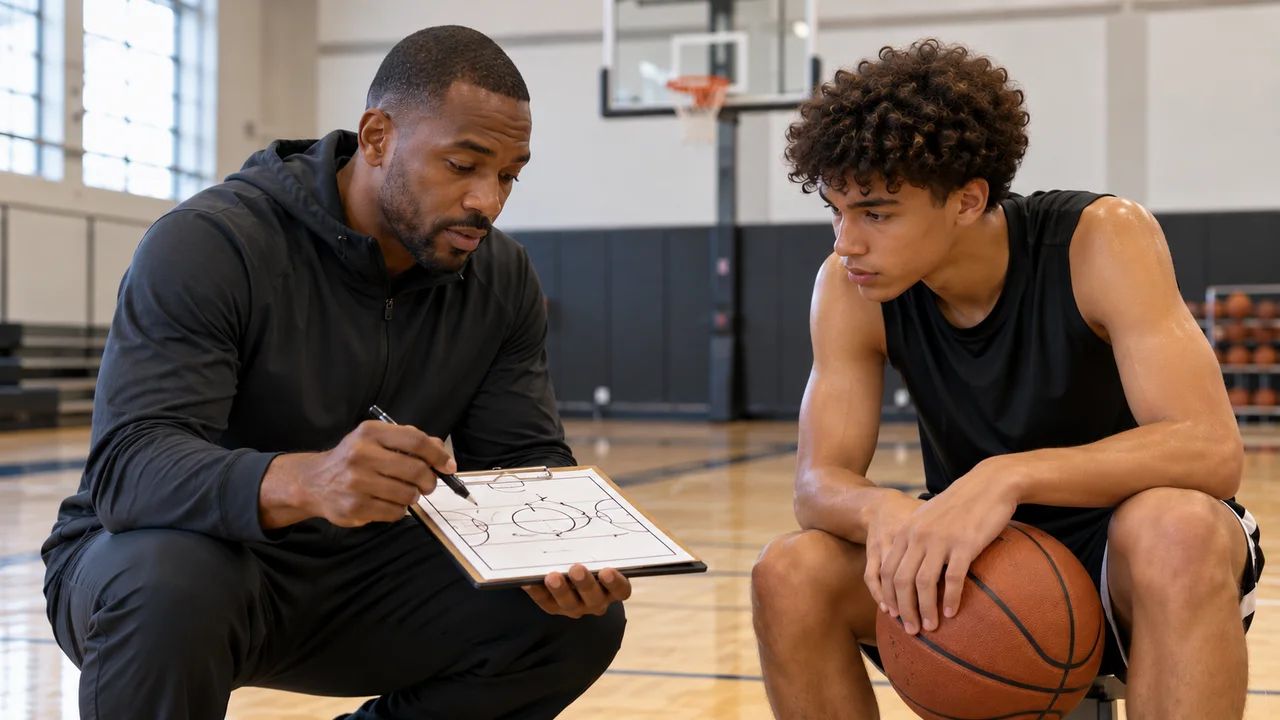
A one-on-one plan looks different. No scrimmage, far more reps per minute, and a finish with a progress check you can repeat next time. This example is for a 12-year-old basketball player. Focus: left-hand finishing. By the end, the player can: make left-hand layups from the left side at game speed.
| Time | Activity | Coaching points | Equipment and setup |
|---|---|---|---|
| 0 to 8 | Ball handling warm-up, stationary then moving | Fingertips, eyes up | One ball, half court |
| 8 to 20 | Mikan drill with left-hand emphasis, then reverse Mikan | Left knee drives up on a left-hand finish. Use the glass. | Under the rim |
| 20 to 33 | Two-dribble attacks from the left wing, left-hand finish. Add light contact from the coach with a pad. | Protect the ball with your body. Finish high. | Cone on the wing, contact pad |
| 33 to 40 | Game-speed layups with the coach chasing | Same cues at full speed | Half court |
| 40 to 45 | Progress check: 10 left-hand layups, record the makes. Agree on home practice. | Same test next lesson | Notebook or phone |
After the lesson, send the parent a short note with three parts: what you worked on, what improved, and one thing to practice at home. Something like "Today we worked on left-hand layups. The progress check was 4 of 10 and the form got better every round. At home, 50 left-hand Mikan reps three times this week." The basketball drills for kids guide has more home drills you can assign.
Planning a full season or lesson package
Give each week a theme that builds on the last one, for example receiving, then passing under pressure, then playing forward. Every third or fourth week, run a review session.
Use the notes field to track progress across sessions: the progress-check number, which cue clicked, and what fell apart under pressure.
In New Jersey, also plan for the move indoors. Fall sessions on open fields often give way to shared gym time or a smaller indoor space once the evenings get cold and dark. Write a small-space version of each block ahead of time: tighter grids, fewer players moving at once, more stations instead of one big game. The same goes for private lessons in a driveway or rented half court.
Common practice planning mistakes
- Too many drills. Three or four activities, run well, beat six rushed ones.
- Too much talking. One cue, then let them play.
- Long lines. If players wait more than they move, add a second station.
- No game-like play. Skills that never meet a defender rarely show up on game day.
- Skipping the warm-up or the recap.
- No plan for low turnout. Write a backup: what does your main block look like with 6 players instead of 12?
A first private lesson is a good place to test all of this. One suggestion: open by asking the player what they want to get better at, then shape the second half of the plan around their answer.
If you coach privately in New Jersey, you can list a free coach profile on Rite Coach so families looking for a soccer, basketball or other coach near them can find you, with no commission on your lessons. For certifications, SafeSport training and background checks, and liability insurance, see our guide to becoming a private youth sports coach in New Jersey.
Frequently asked questions
What should a youth practice plan include?
A date and focus, minute marks for each block, the activity, two or three coaching points, equipment and setup, and notes for next time. Keep one objective per session.
How long should practice be for kids under 8?
Short. USA Hockey's structures for its youngest age groups run 50 to 60 minutes split into short stations, with six minutes as the cap per station for 6U players. In any sport, keep blocks brief and make most of them games.
Do private coaches need a written practice plan?
Yes. A written plan keeps one-on-one reps focused, gives you a progress check to repeat, and gives parents a clear answer about what their child worked on.