Softball hitting drills (and how to hit a softball)
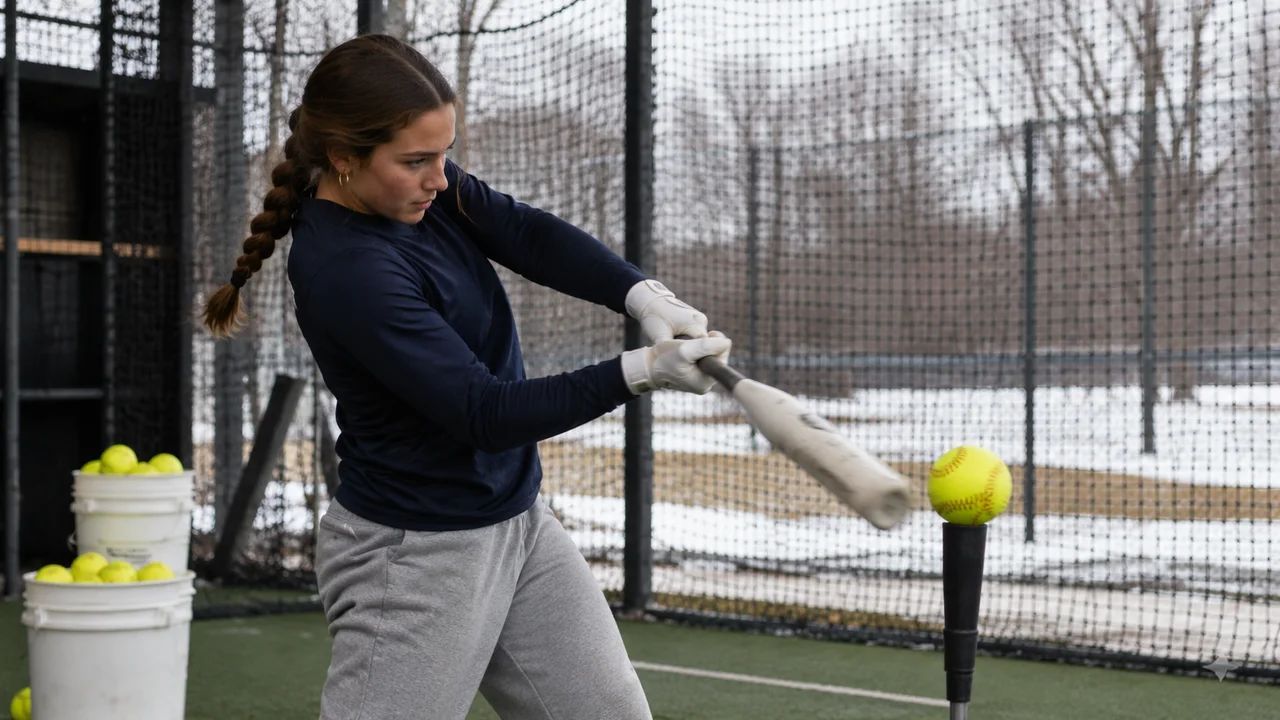
Stand behind the cage at a 12U softball practice and you will see the same thing over and over: a hitter who looks great off the tee, then swings late and under every live pitch. The swing is not the problem so much as the clock. In fastpitch the ball arrives fast and from close up, and a swing that takes a little too long to start never catches up.
This guide covers how to hit a softball, step by step, then the softball hitting drills that build a shorter, more reliable swing: tee work, toss drills, hands and bat path drills, timing drills, and a home routine. When your hitter is ready for live reps or a lesson, you can compare softball coaches in New Jersey on Rite Coach.
How do you hit a softball?
Every coach words it a little differently, but the swing breaks into six parts. Teach them in order, one at a time:
Stance. Feet about shoulder width apart, knees soft, weight on the balls of the feet, hands near the back shoulder.
Load. A small shift of weight onto the back leg as the pitcher starts the arm circle. The hands move back slightly, not down.
Stride. A short, soft step toward the pitcher. The front foot lands closed or slightly open, with the weight still mostly back.
Swing. The back hip turns first and the hands follow, taking the knob of the bat toward the ball on a short path.
Contact. Head still, eyes on the ball, top hand palm up and bottom hand palm down at the moment of contact.
Finish. The bat keeps going through the ball and finishes high, with the back foot turned and the hitter balanced.
Where contact happens depends on the pitch. An inside pitch has to be met out in front of the plate, or it jams the hands. An outside pitch is hit deeper, closer to the body, and driven the other way. A pitch down the middle sits in between.
Timing is the part that makes softball its own skill. A high school pitcher throws from 43 feet under NFHS rules, compared with 60 feet 6 inches in high school baseball. The pitch is slower than a baseball fastball, but it covers much less ground, so hitters have less time to decide. Our guide to softball pitching drills lists the pitching distance at each level, which is worth knowing when you set up front toss at home.
Tee drills
The tee takes timing away so a hitter can build the movement. If you have read our baseball hitting drills for kids, you already know the basics: basic tee work, high and low tee, and inside and outside tee placement all work the same way with a softball, so we will not repeat them here. Two softball-specific tee drills are worth adding.
Two-tee drill
Set two tees in a line toward the pitcher, about a ball's length or two apart, with the ball on the front tee only. The hitter has to drive the front ball without touching the back tee. A long, looping swing clips the back tee every time; a short, direct path to the ball does not. It shows a hitter what "short to the ball" means without a lecture.
Deep tee, then front tee
Hit five with the tee set deep (even with the back half of the plate) and drive each ball to the opposite field. Then hit five with the tee well out in front and pull them. The point is to feel that the contact point, not the swing, changes with location.
Soft toss and front toss
Side soft toss into a net and front toss behind a screen are both covered in the baseball post, and the setup is the same. For softball, two adjustments matter. First, in front toss, keep the tosses firm and the distance short: a soft, lofted toss from far away teaches a hitter to wait, which is the opposite of what fastpitch asks for. Second, in soft toss, the cue is a short path: hands go straight to the ball, not back and around.
Rise ball and drop ball recognition
A rise ball is thrown with backspin on an upward path, so it drops much less than a hitter expects and seems to climb out of the zone. A drop ball is thrown with topspin and falls late near the plate. Both get swings and misses because they start out looking like strikes.
You can build recognition at home with front toss. The tosser mixes three heights: chest high and above (the rise ball), belt high, and knee high or lower (the drop ball). The hitter's rule: let anything at the letters or above go by, and on low pitches, swing only if the ball is still above the knees. It is not the same as a real rise ball, but it trains the decision, which is what most young hitters get wrong.
Hands and bat path drills
Fence drill
Stand facing a fence or net, about a bat's length away, with the knob of the bat touching the belly button and the end of the bat just touching the fence. Take slow swings. If the bat hits the fence, the hands are pushing out away from the body (called casting), which makes the swing long and slow. Move a little closer as the swing gets tighter.
Inside pitch drill
Set the tee on the inside corner and well out in front. The hitter keeps the hands inside the ball and turns the hips hard, so the knob leads and the barrel comes through late. Hitters who cast will roll over or hit it off the handle.
Lower-body and timing drills
No-stride drill
The hitter starts in the landing position, front foot already down, and swings off the tee or front toss without a stride. All the power has to come from the hips turning. It is a good fix for hitters who lunge at the ball or whose stride is so big that their head drops.
Balance finish
After every swing, hold the finish for two seconds: back foot turned, bat over the front shoulder, head still. A hitter who cannot hold it was off balance during the swing, usually from lunging or swinging too hard.
A home hitting routine
In the off-season, 15 to 20 minutes, three times a week, is plenty. A short, focused session beats one long one, because the swing learns from frequent repetition.
| Drill | Reps | Equipment |
|---|---|---|
| Fence drill, slow swings | 10 | Bat, fence or net |
| Two-tee drill | 15 | Two tees, net, balls |
| Deep tee, then front tee | 5 each | Tee, net, balls |
| No-stride swings | 10 | Tee or front toss, net |
| Front toss with heights, holding the finish | 15 to 20 | Screen, net, whiffle or soft balls |
Film a few swings every couple of weeks, from the side and from straight in front, with the phone at hip height. Look for three things: does the head stay still through contact, do the hands drop or push out before the swing starts, and does the hitter finish balanced.
Hitting season in New Jersey
High school softball in New Jersey is an NJSIAA spring sport. The association's spring quick chart lists March 8, 2027 as the first day of softball practice for the 2026-27 season, with games from March 15 (NJSIAA spring quick chart; the dates are listed as tentative). That leaves the winter for batting cages, garages and indoor facilities, which is when most high school and travel hitters actually change their swings.
If your child starts lessons, ask this at the first session: what is the first thing you would change in this swing, and why? A good hitting coach will watch plenty of swings before answering, name one or two things rather than ten, and tell you which drills to repeat at home. Our guide to private vs group sports training covers when one-on-one work is worth it.
You can compare private softball coaches in New Jersey on Rite Coach by experience and the ages they train, then contact them directly.
Frequently asked questions
What is the best softball hitting drill for beginners?
Basic tee work, then the two-tee drill. The tee removes timing so a beginner can learn the movement, and the second tee gives instant feedback on whether the swing is short.
Is hitting a softball different from hitting a baseball?
The mechanics are very similar. The big differences are timing, because the pitcher is much closer, and the pitches, because a rise ball moves in a way a baseball pitch does not.
How often should my child practice hitting at home?
Three short sessions of 15 to 20 minutes a week is a good off-season target. Stop when the swings get sloppy, since tired reps repeat the flaws.
Looking for a private softball coach?
Rite Coach lists coaches across New Jersey.